

For years, the direction of travel in money management has looked obvious. First, you show customers what’s happened, then help them understand it, then nudge them towards a better choice and, finally, become the coach that keeps them on track.
That progression is real, but it’s also incomplete. A banking app can prompt more saving, trigger more check-ins and make a customer feel wonderfully productive. But none of that proves their financial position has improved.
The next frontier in financial wellbeing is not more intervention, but accountable intervention: support that can prove it helped, explain how and leave the customer firmly in charge.
Visibility was the start not the finish
Digital money tools have evolved in a clear sequence. Products such as Digit and Qapital (below) made saving easier through automation, goals and rules. Gamified experiences added streaks and progress bars. Financial health checks turned account data into an assessment. And now AI-powered tools are promising an always-on financial coach.
Each step closes the gap between knowing and doing. But the closer a provider gets to shaping behaviour, the higher the burden of proof becomes. A financial coach is making a strong promise: trust this guidance and you will be better off.
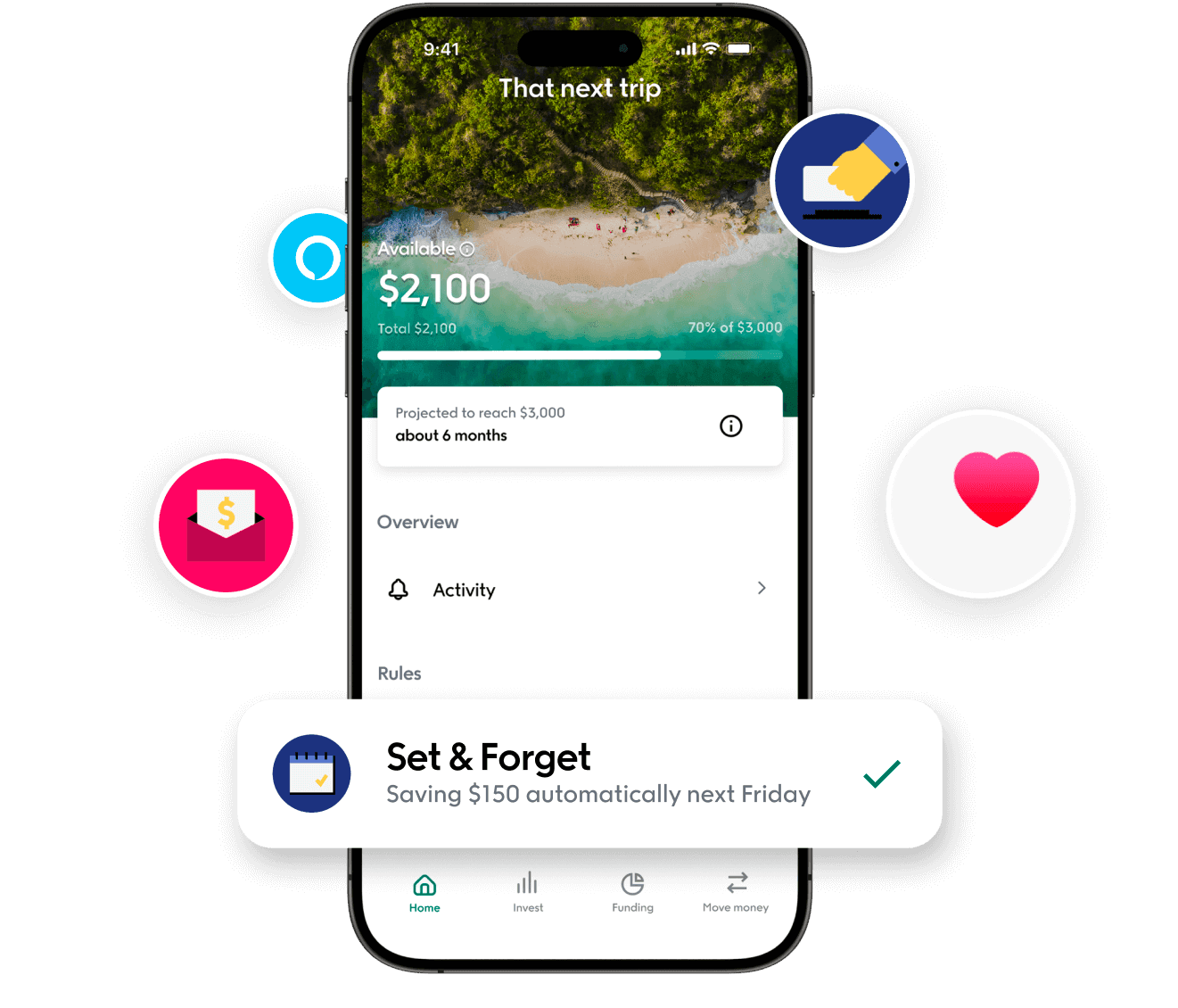
Digital teams are good at measuring what happens inside a product - opens, clicks, streaks, goal creation, feature use. These show whether an experience prompted action, but not whether the action was right for that customer.
A savings streak may increase transfers while leaving too little for bills. A personalised prompt may increase product take-up while serving the bank's target better than the customer's goal. The proxy is often easier to move than the outcome.
Impact means a relevant behaviour change that improves the customer's financial position while keeping them informed and in control. Miss any one of those and the product may look successful on an engagement level, while the customer's financial life stands still, or worse.
Measure impact in three layers
Start with behaviour. Think repeated deposits into savings, fewer immediate transfers back into a current account, more on-time credit repayments, continued use of automated payday distribution into pots, or regular investment contributions.
Then measure agency. Did the customer understand why the suggestion appeared? Did it feel relevant? Do they feel more confident making the next decision without the app doing it for them? Track the proportion of relevant financial actions initiated independently versus those that followed a nudge, alongside sustained positive financial outcomes
Finally, test the financial result. Did the emergency buffer grow? Did expensive debt or interest fall? Did the customer avoid an overdraft, missed payment or end-of-month shortfall? Are they closer to a goal after three or six months, not just three or six days?
These three layers help prevent teams from mistaking individual signals for meaningful progress.
Improving financial wellbeing requires a combination of indicators that, when considered together, provide a more complete picture of customer outcomes. For example, limited withdrawals from savings might suggest a stronger financial buffer, but could equally indicate that a customer is unable or unwilling to access their money when needed.
Conversely, a planned withdrawal that enables someone to manage an unexpected expense without taking on additional debt may represent a far more meaningful improvement in their financial wellbeing than leaving their savings untouched.
Prove the support before scaling it
A useful measurement plan starts before the feature launches. Define the customer problem, identify the relevant goals, and determine an appropriate time to measure behavioural changes. 'Improve financial wellbeing' is too broad. 'Help customers with variable income avoid running short before payday' is testable.
Separate the intervention, behaviour and outcome:
- A payday prompt is the intervention.
- Moving money into a pot is the behaviour.
- Covering an unexpected cost without high-interest credit is the outcome.
A useful progress update has five parts: the customer's goal, the action they chose, the change observed, any trade-off or uncertainty, and the next decision they control.
Here’s an example: 'Since you set up a payday split three months ago, £450 has stayed in your emergency pot. You are 45% of the way to your target. Your bills are higher this month, so you may want to review the amount.'
Customers should be able to distinguish education from advice, a wellbeing prompt from a sales prompt, and a recommendation based on their goal from one influenced by a provider's commercial interest. If those lines blur, trust will evaporate long before the technology runs out of clever things to say.
For product leaders, the brief is clear. Define the outcome, measure the behaviour, financial result and customer agency, prove the change lasts, and then show the customer what happened in a way they understand.
11:FS helps financial institutions define those outcomes, benchmark the best experiences, test the interventions and help design propositions customers love because the value is real. If your wellbeing proposition is rich in features but light on proof, that is the place to start.
Drop us a line at hello@11fs.com or find out more at 11fs.com/ventures.