.svg)
.svg)

.png)
Barclays is acquiring the UK arm of GoHenry, a money app for 6 to 18-year olds. With a reported price tag of £180 million for around 500,000 active accounts, £360 per head is a chunky investment. CEO of Barclays UK, Vim Maru, has claimed that the acquisition will “turbocharge our offering for households and families”.
It’s an aspiration that will likely ring true across many boardrooms.
As six-time winners of Consultancy of the Year at the British Bank Awards, we’ve heard firsthand how many of the world’s most established financial institutions are staring down the barrel of an ageing customer base.
The Barclays move has reignited the debate around what it takes to acquire, engage and retain the next generation of customers.
Adapting to the new baseline
Barclays’ acquisition play is a familiar one. NatWest had a similar idea in 2021 when they acquired Rooster Money. Whilst the acquisition price wasn’t disclosed, the mood music 5 years later is positive.
Its 2025 annual report claims that it now “serves 15 times more customers than when we acquired it”. The brand is even releasing a limited-edition range of ‘Chorewear’ for young customers with built-in retractable dog leads and insulated snack pockets, informed by analysis of over half a million Rooster Card users’ money habits.
But PR initiatives aside, 5 years is an awfully long time in fintech. Challengers in multiple markets have shifted the baseline expectations of children and young adults when it comes to what a digital bank should - and shouldn’t - do.
Here are some of the ones leading the way.
Greenlight
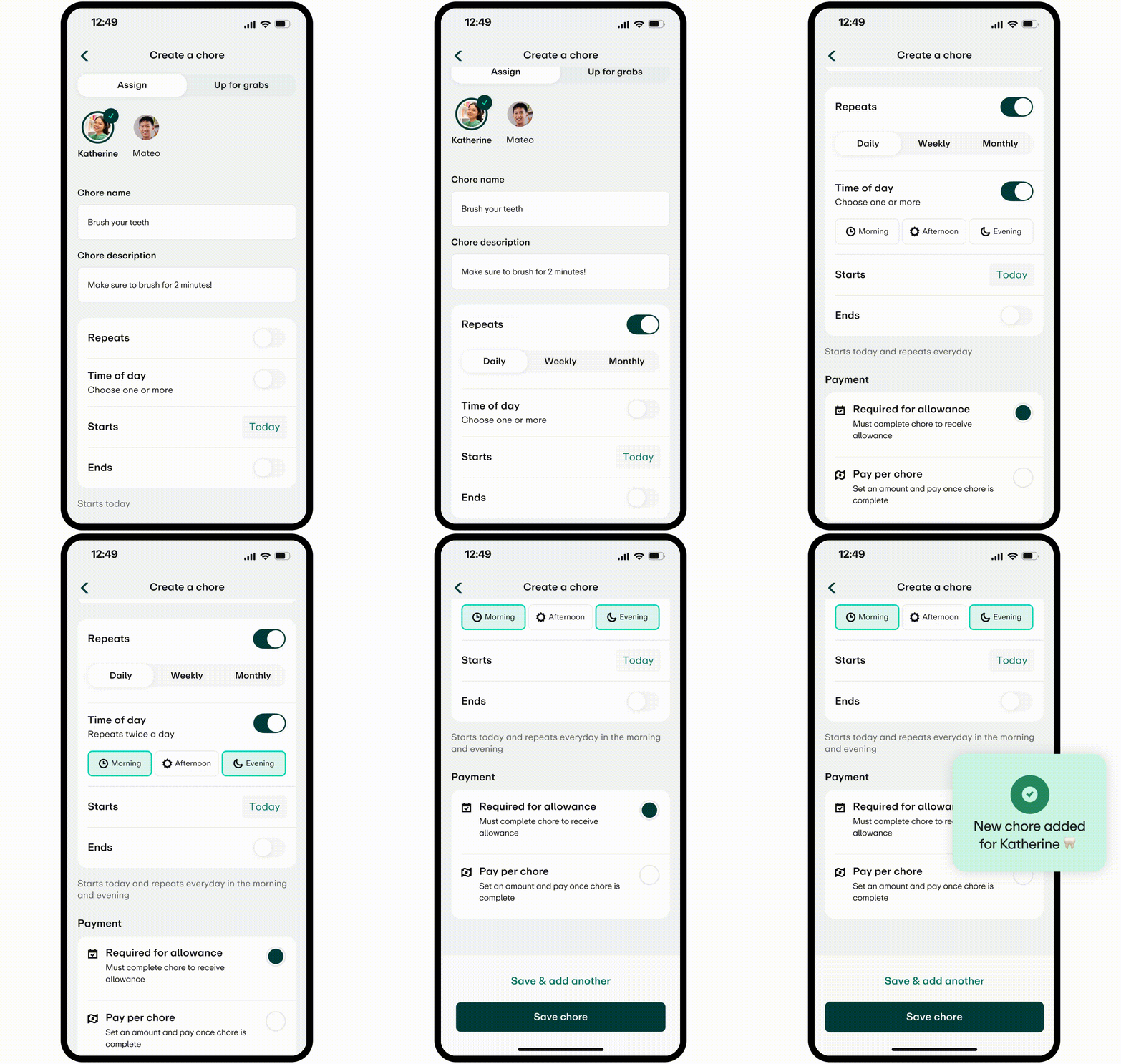
An OG in the kids account space across the pond. This American platform has expanded from an initial offering focused on a safe spending card and money management app for kids, and is now branching out into other areas of family organisation and safety. From family calendar hub devices to location tags for kids and family fraud protection.
Acorns
US-focused Acorns’ stated ambition is to bring “financial wellness to the whole family”. Having initially focused on building out saving and investing services for adults, it acquired GoHenry in 2023 to accelerate the build of its Acorns Early app for children. 1.4 million customers later, it’s now sold the UK arm of the business to Barclays.
Step
Step hit the headlines in February of this year after it was acquired by Beast Industries, the company of Jimmy "MrBeast" Donaldson. With over 7 million customers, Step has, to-date, been focused on providing American teens with a sponsor-supervised account that enables them to spend, save and build credit.
Acquisition announcements emphasised a shared the vision to provide young Americans with “the tools and knowledge they need to build financial security”. And with one of the world’s leading content creators now at the helm, they’re definitely one to watch.
Almost any major challenger you can think of
In the US, CashApp and Venmo have both created offerings for kids and teens. Whilst the age ranges for getting set up vary, the core premise is the same - making it simple for parents with pre-existing accounts to open up and supervise youth accounts within the same app they already transact in.
Looking beyond the US, many of the digital challenger big hitters in other geographies have already launched ‘junior’ accounts. Monzo, Revolut, Starling, N26 and Nubank (to name just a few) are all making significant inroads in this space.
Senior figures at Barclays will have no doubt clocked the claims in Monzo’s 2026 annual report that its ‘Monzo for Under 16s’ product has acquired “more than 1 million customers” in less than a year. Here's a look at Starling's Kite account for under-16s and its 'View transactions' journey taken from 11:FS Pulse.
_DEC25%20-%20Mobile%20-%20GB_00_00_23-00_00_38-hd.gif)
Designing for what comes next
Fintechs and digital banks have reshaped customer expectations around opening and managing junior accounts from a single app. If your offering for young people is lagging behind, there’s good news and bad news.
The good news? There are still multiple areas where we at 11:FS believe these offerings can support children and parents further. Moving beyond supervised spending and basic savings pots to help young people and their families build future financial readiness.
The bad news? Crafting the proposition and nailing the experience design is complex. This is about multiple users - parents and children, but also wider family members too. There are multiple Jobs To Be Done that need to be addressed to support and enable the entire network that helps young people take progressive steps into independent financial management.
The definition of ‘success’ in this space is also multi-faceted. Builders need to have a clear line of sight for how they make serving this audience commercially viable, and over what timeframe.
Are you taking the Greenlight route and attempting to build out and monetise adjacent problem spaces relevant to young customers and their families?
Or is this more about creating a funnel for your future savers, investors and borrowers? If so, then success is going to be hugely reliant not just on acquiring and serving customers as children, but also meaningfully and contextually transitioning them into future products and services.
Moments that still matter
It always surprises me how clearly I can remember opening my first bank account as a child. Sitting next to my Dad in our local bank branch. Holding my first cheque book. Moments which at the time felt like a significant rite of passage.
Today, children’s first experiences with banking have inevitably changed. From branches and cheque books, to apps and prepaid cards. And in today’s financial services landscape - where barriers to opening new accounts and products are ever diminishing - there is perhaps less of a guarantee that the bank account your parents help you open will be the one that you stick with into your adult life.
Nonetheless, being the brand that enables and encourages those first steps of financial independence still represents an opportunity to establish brand connections that few other life moments replicate. The competition to acquire, engage and retain the next generation of customers is stronger than ever. But the price of standing still is a slow and steady decline into irrelevance.
At 11:FS, we don't just design digital propositions; we help you navigate the complexity of the growth cycle - from validating unmet customer needs to launching scalable future ready propositions.
If you are struggling to define your strategy for acquiring, engaging and retaining the next generation of customers, let’s talk.