Content Hub
.svg)
.svg)
How are banks and fintechs planning for a digital future.

What are our crypto predictions for 2023?
Happy 2023, fintech fans!
What are our fintech predictions for 2023?
I recently sat down with Rhian Lewis, co-founder of Count My Crypto and Sara Walker from IG to discuss which cryptocurrencies could come close to bitcoin. Take a look at some of the points we covered below, or head over to IG to watch the full interview.

The future is now: how AI will completely disrupt the customer experience
The AI revolution is reshaping financial services with the force of a category-five hurricane. The seismic shifts it’s creating are palpable, with generative AI standing at the forefront of this transformation.

4 fintechs and their winning social features
Once upon a time, social media and finance apps might’ve seemed like strange bedfellows.

What's needed for the next evolution of climate fintech?
COP 27 came and went last month. It’s now time to look back at what happened and what still needs to happen. What can the climate fintech industry in particular reflect and iterate on as we head into 2023?

Why is it so hard for FS companies to get tech right?
Getting tech right in banks is hard. We get this because our experts have worked in some of the biggest financial services institutions and experienced how things can be done differently. In this article, we’ll share some of the insights that we’ve learnt along the way.

How early-stage investors can navigate the most chaotic economy in living memory
Mortgages and ancient sex positions aren’t two things you’d usually put together (or want to read about at the same time, for that matter). But digital mortgage broker Habito has ripped up the rulebook and created a Mortgage Kamasutra book in its place. And we can’t help but respect them for it.

It’s time for incumbents to invest in web3
One of the phrases you often encounter when reading things about mental health is "It's OK to not be OK." Whilst I get the sentiment, as someone who has been there, it really isn't OK. It sucks.

The next generation of financial services has to be truly inclusive
We all employ a user-centred design (UCD) approach to inform what products we build and how they should work, but all that customer insight gives us one oft-overlooked learning: the actual language customers use to speak about their problems.

What a recession means for fintech
Did you know that when they’re not dishing up masterly analysis, everyone’s favourite web3 wizards - 11:FS Global Strategy Director, Crypto Mauricio Magaldi and Visa Head of Crypto Cuy Sheffield - like to dabble in a spot of divination? I know, right?!

Financing for app and game developers isn’t fit for purpose
As I sit here trying to write something strictly about fintech, there’s only one thing on my mind: how important it is to have an employer that truly values pregnant employees.

How is fintech helping with customer stress?
Tottenham Hotspur are completely cashless (and trophyless) at their new stadium. Lionel Messi has launched the ‘Messiverse’ in partnership with blockchain platform Ethernity. Manchester City and Laybuy have teamed up to offer a Buy Now Pay Later (BNPL) service to fans. And that’s just the tip of the iceberg.

It's time for community investing to go mainstream
Despite the global economic climate, a lot of banks and fintechs have dipped their toes into the crypto waters in recent months.

Banks: it's time to break free of your legacy tech
You don’t have to spend much time in retail banking before you come across legacy systems - a catch-all term often used to explain why banks are so slow and unresponsive.

Changing the perception of insurance
I recently heard someone suggest that ‘insurance is just like gambling.’ Bit of a stretch, but I could see their point. Both are fundamentally risk-based, and it raised an interesting question - do you ever really ‘win’ in insurance?

105
1105. Insights: Who owns the banking relationship in the AI era?
As AI becomes another interface between customers and their money, could banks lose their place at the centre of the financial relationship?

1099
1099. Insights: Subscription banking - Can banks turn customers into subscribers?
Subscription banking is growing – but what makes customers willing to pay for something they’ve traditionally expected for free?

1093
1093. Insights: What it’s really like to start a fintech in 2026
Starting a fintech has never been easier but has building a successful one ever been harder? Host David M. Brear is joined by Fatbardha Rino, CEO of Jet Bank, and Herbie Wildwood, Founder of Legacy, to explore what it really takes to build

1091
1091. Insights: Can AI make us financially healthier?
About this episode: For years, financial wellness has focused on helping people become better at managing their money. But what if the next generation of financial products could take some of that burden away entirely? Host Ross Gallagher

1085
1085. Insights: Are Neobanks replacing private banking?
For years, neobanks competed by offering better banking experiences. Now, the biggest players are expanding into investing, AI-powered financial guidance, wealth management and premium services—areas once dominated by private banks.

1083
1083. Insights: Why does running a business still feels harder than it should? With Sage
In this episode, with partnership with Sage, we're exploring why running a business still feels harder than it should—and how embedded experiences are changing that. Host Kate Moody, Customer Strategy Director at 11:FS, is joined by Gordon Stuart, SVP of Embedded Services at Sage, Emma Campbell, Chief Banking Officer at @One.io, and Sarah Kocianski, fintech consultant and analyst.
.jpg)
1077
1077. Insights: What does it take to build the bank of the future? With Engine by Starling
In this episode, we're exploring what it takes to build modern banking technology from the ground up. Host Ross Gallagher - Head of Consulting at 11:FS - joined by Sam Everington, CEO of Engine by Starling, and Jody Bhagat, President of North America at Engine by Starling.

1073
1073. Insights: From stablecoins to AI agents - how Stripe is changing the internet economy
In this special episode of Fintech Insider Insights, recorded live at Stripe Tour London, we're joined by two Stripe leaders to explore how the internet economy is evolving - and the infrastructure powering its next chapter.

1071
1071. Insights: Fintech's coming home - The growing relationship between fintech and football
What do Arsenal, Manchester United, Nottingham Forest and the Home Nations football teams have in common? They're all partnering with fintech brands.

1067
1067. Insights: Can regulation become fintech’s biggest enabler?
Is regulation really the thing slowing innovation down — or is the bigger challenge how firms respond to it?
.jpg)
1065
1065: Insights: Is agentic AI the future of investing?
As AI moves from supporting investment decisions to making them, what happens to trust, accountability, and control?
.jpg)
1063
1063. Insights: Can traditional banking survive the AI era?
In this episode of Fintech Insider Insights, in partnership with Backbase, David Brear is joined by Jouk Pleiter, CEO & Founder of Backbase, to explore why banking may be approaching a breaking point in its architecture.

1061
1061. Insights: The advice gap: Are banks helping customers or protecting themselves?
Advice is regulated and personalised. Guidance is broader and safer - but that line is starting to blur.
1047
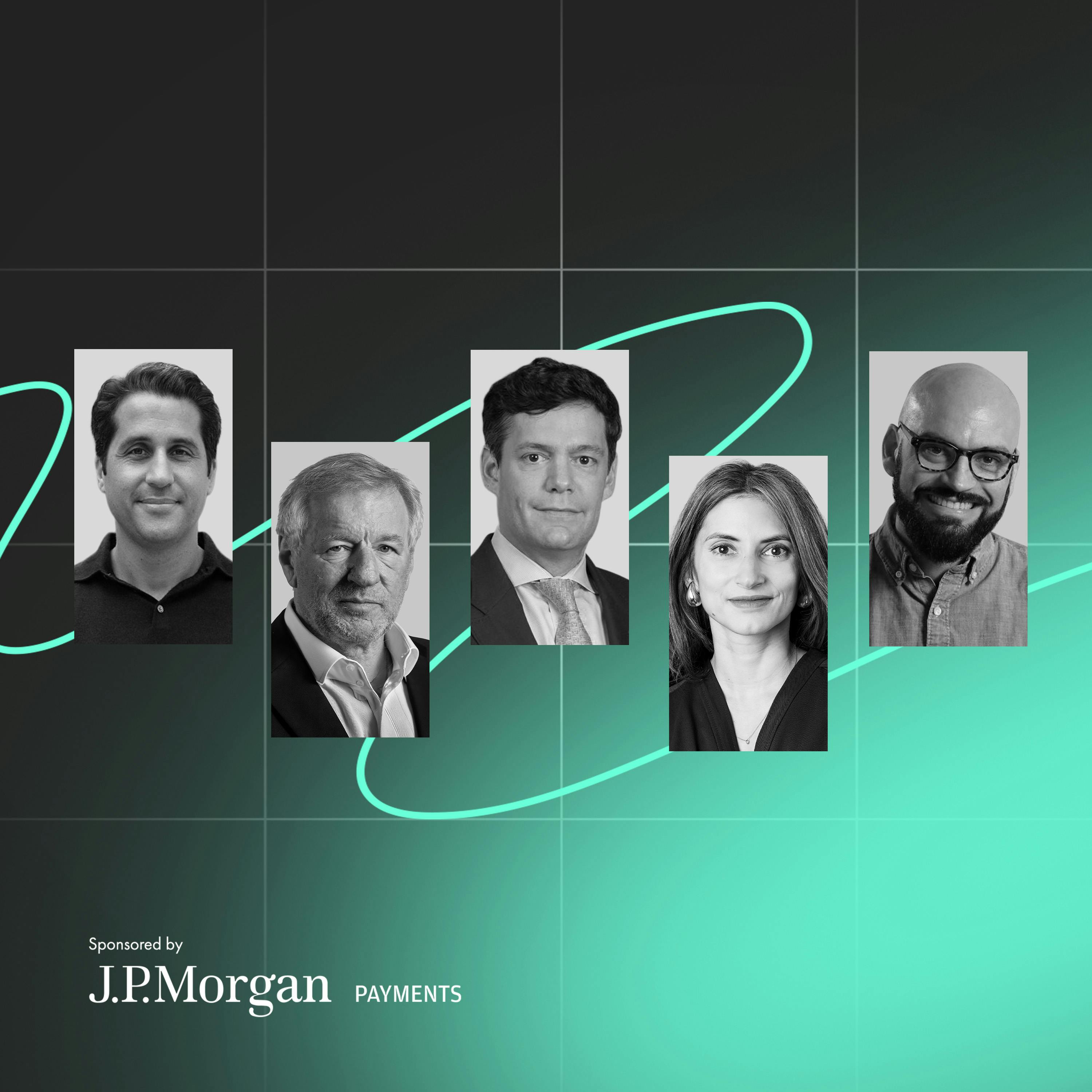
1047. Insights: Can you launch a start-up in 2026? Live from J.P. Morgan Payments
Recorded live from J.P. Morgan’s e-commerce and fintech forum, 11:FS CEO David M. Brear is joined by an all-star panel to tackle a deceptively simple question: can you still launch a startup in 2026?

1045
1045. Insights: Has the banking battlefield evolved - and is Revolut built for it?
For years, banking has been framed as a battlefield: incumbents defending their turf while fintech challengers attack with better tech and customer experience. But in 2026, that picture may have changed.
Banks are losing the loyalty game | 11:FS Explores
Hey, banks! This might sting a bit. You’re getting loyalty all wrong - and it’s costing you customers. But all is not lost!
3 ways AI is shaking up UX in financial services | 11:FS Explores
The entire world is buzzing about AI, and that ain't changing anytime soon. But as AI becomes more integrated into our daily lives, what impact will it have on financial services and how people interact with them?




How does banking regulation work? - Decoding: Banks
Regulation is essential. It stops banks from going bust or behaving badly.

How does lending work? - Decoding: Banks
Lending has been around for thousands of years and is one of the cornerstones of banking.

How do card networks operate? - Decoding: Banks
Mastercard and Visa are the two biggest credit card networks in the world.

How has the banking battlefield evolved? - Decoding: Banks
We kick off our Decoding: Banks series with a look at the banking landscape today and how we got here.

11:FS Explores: Legacy banking systems ft. David M. Brear
David M. Brear, our 11:FS CEO, takes us through legacy technology within banks - but of course, with a really cool Lightboard.

Why Homebuying is broken and how to fix it | 11:FS Explores
There are one billion people globally who can't prove their identity. That's a big problem for accessing financial services.

What Griffin are going to do now they have their banking licence with CCO Adam Moulson | Spotlight
Inclusive design is a mindset and a process that suggests that you should bring as many people as possible - and the most diverse of voices that you can - into your product design product process, so that you're being truly inclusive. It's designing with people rather that just at them. Charlotte Fereday, Product Director, Ventures, explains what inclusive design is, why it's important, how you can design more inclusively, and answers - how possible is truly inclusive design?

Unleashing creativity! A case study on sparking innovation with Bidyut Dumra from DBS | Spotlight
On this episode of Spotlight, 11:FS Crypto Global Strategy Director, Mauricio Magaldi is joined by Ramp Network Co-Founder and CEO, Szymon Sypniewicz. In today's chat, the pair discuss Szymon's career, the current regulatory landscape in crypto, and what the future might hold when it comes to widespread crypto adoption.

960
Insights: The future of Revolut with UKCEO Francesca Carlesi
The UK banking battlefield has never been more competitive. Customers expectfinancial apps that are personalised, seamless, and that genuinely make a differenc...
960
Insights: The future of Revolut with UKCEO Francesca Carlesi
960
Insights: The future of Revolut with UKCEO Francesca Carlesi
The UK banking battlefield has never been more competitive. Customers expectfinancial apps that are personalised, seamless, and that genuinely make a differenc...
960
Insights: The future of Revolut with UKCEO Francesca Carlesi
960
Insights: The future of Revolut with UKCEO Francesca Carlesi