Content Hub
.svg)
.svg)
Learn about the latest FS trends and news, from industry experts.

Becoming truly digital requires organisational culture change - here’s how to do it
Nearly a year ago now (how time flies during a global pandemic) we wrote that there’s never been a more important time to be truly digital. Little did we know that this would ring truer today than it did then!


Your brand matters more than your features
For anyone launching a new product, there are probably hundreds of questions on their mind. One of these is likely to be whether brand relevance or feature parity is more crucial to a product’s success. This is taken from our Unfiltered newsletter. Subscribe now for a no BS, uncensored analysis of fintech news and hot topics delivered to your inbox each fortnight.

The top Middle Eastern fintechs to watch in 2021
As 2019 winds down, we’re doing something a little different for this year and reviewing our best and most popular podcast episodes.

Why the FS industry needs to grow green fingers, ASAP
Like everyone else locked down here in the UK, I’ve been working my way through Netflix at an unrelenting pace... This is taken from our Unfiltered newsletter. Subscribe now for a no BS, uncensored analysis of fintech news and hot topics delivered to your inbox each fortnight.

Product teams: the secret to fintechs’ success?
It’s not often that we see regulation pre-empting innovation – rarer still to see it drive innovation forward.

The case for integrated QAs in tech teams
You would think that with all the ‘digital transformation’ in banking, the CIO would be king. And yet it doesn’t feel that way from within the CIO’s office.

Why are financial services brands fundamentally irrelevant for the most important moments in our lives?
Financial services brands are still fundamentally irrelevant for many of the most important moments of our life. But why is this? This is taken from our Unfiltered newsletter. Subscribe now for a no BS, uncensored analysis of fintech news and hot topics delivered to your inbox each fortnight.

Our fintech predictions for 2021
It’s 2022! And we’ve got a sneaking suspicion this year is gonna be one to remember.

7 takeaways from the final episode of Decoding: Banking as a Service
The final episode of our brand-new video series, Decoding: Banking as a Service, is here! If you missed it (or any of the others) catch up here. Here’s a rundown of this episode if you prefer reading to watching 📖
How BaaS has fuelled neobanking in the US
In the last few weeks Wells Fargo’s Control Tower, a set of tools designed to give customers better oversight over their financial lives, has been made available to all digital customers.

Celebrating the wins of 2020
We made it, folks! It’s been a tough year for all of us. One where both our professional and personal lives have been impacted in a big way.

6 takeaways from the latest episode of Decoding: Banking as a Service
The fifth episode of our brand-new video series, Decoding: Banking as a Service, is here! If you missed it (or any of the others) catch up here. Here’s a rundown of this episode if you prefer reading to watching 📖

Could the future of banking be baby boomers?
Arguably the biggest story right now is the announcement of Stripe Capital’s new end-to-end lending API for platforms to offer financing options to their SMB customers. (Simon Taylor wrote a great piece on this at the weekend.) This is taken from our Unfiltered newsletter. Subscribe now for a no BS, uncensored analysis of fintech news and hot topics delivered to your inbox each fortnight.

The risk of fintech blanding
How many times have you looked at a job posting only to see the mention of free fruit? Sure it’s nice to have free food, but what purpose does it serve and does it have anything to do with employee wellbeing?

773
773. News: Mastercard pushes in to Africa with MTN deal and niche banks are on the rise
Mastercard takes minority stake in MTN, rental platform Fronted closes down, and Bank Of Ireland customers go crazy for ATM glitch – Benjamin Ensor is joined by some great guests, from Anthemis, Cornerstone Advisors, and Ebanx, to talk about the most interesting stories in financial services over the last 7 days.

772
772. Insights: Has the fintech revolution ignored older customers?
Kate Moody is joined by some great guests, from 11:FS, ClearEstate, and PensionBee, to look at the financial services aimed at customers over 60.

770
770. News: PayPal launches stablecoin and Apple $10 billion rocks the banking world
PayPal launches stablecoin, Apple announces $10 billion in deposits, and Drake launches Shopify mansion – Kate Moody and Ross Gallagher are joined by some great guests, from Fiat Republic and Knot API, to talk about the most interesting stories in financial services over the last 7 days.

193
193. Insights: Checking in on our 2023 predictions
EL. EF. GEE. Today we bring you: a recap of our 2023 predictions for the crypto space. what did we predict correctly? What did we get completely wrong? What still has potential to materialise in the next few months leading up to 2024? All this and much more on today's Blockchain Insider!

768
768. News: Shopify and HSBC blur the lines between e-commerce and financial services
Shopify launches credit card, HSBC and Tradeshift launch joint embedded finance venture, and Snoop gets acquired – Ross Gallagher and David Barton-Grimley are joined by some great guests to talk about the most interesting stories in financial services over the last 7 days.

767
767. How do you innovate in a highly regulated industry?
David M. Brear is joined by Standard Chartered CEO, Bill Winters, in this interview deep-diving into innovation in the banking space!

766
766. Focus: What problem is mobile money solving in Sub-Saharan Africa?
David M. Brear is joined by some great guests from Visa, Chipper Cash, and DJAMO, to discuss the evolution and further potential of mobile money in Sub-Saharan Africa.

765
765. News: FedNow powers up and Dame Alison Rose steps down
Fed launches long-awaited instant payments service, NatWest boss Alison Rose resigns, and McDonalds launches McNuggets Land in the metaverse – Kate Moody and Benjamin Ensor are joined by some great guests, from Founders Factory and Chamber of Progress, to talk about the most interesting stories in financial services over the last 7 days.
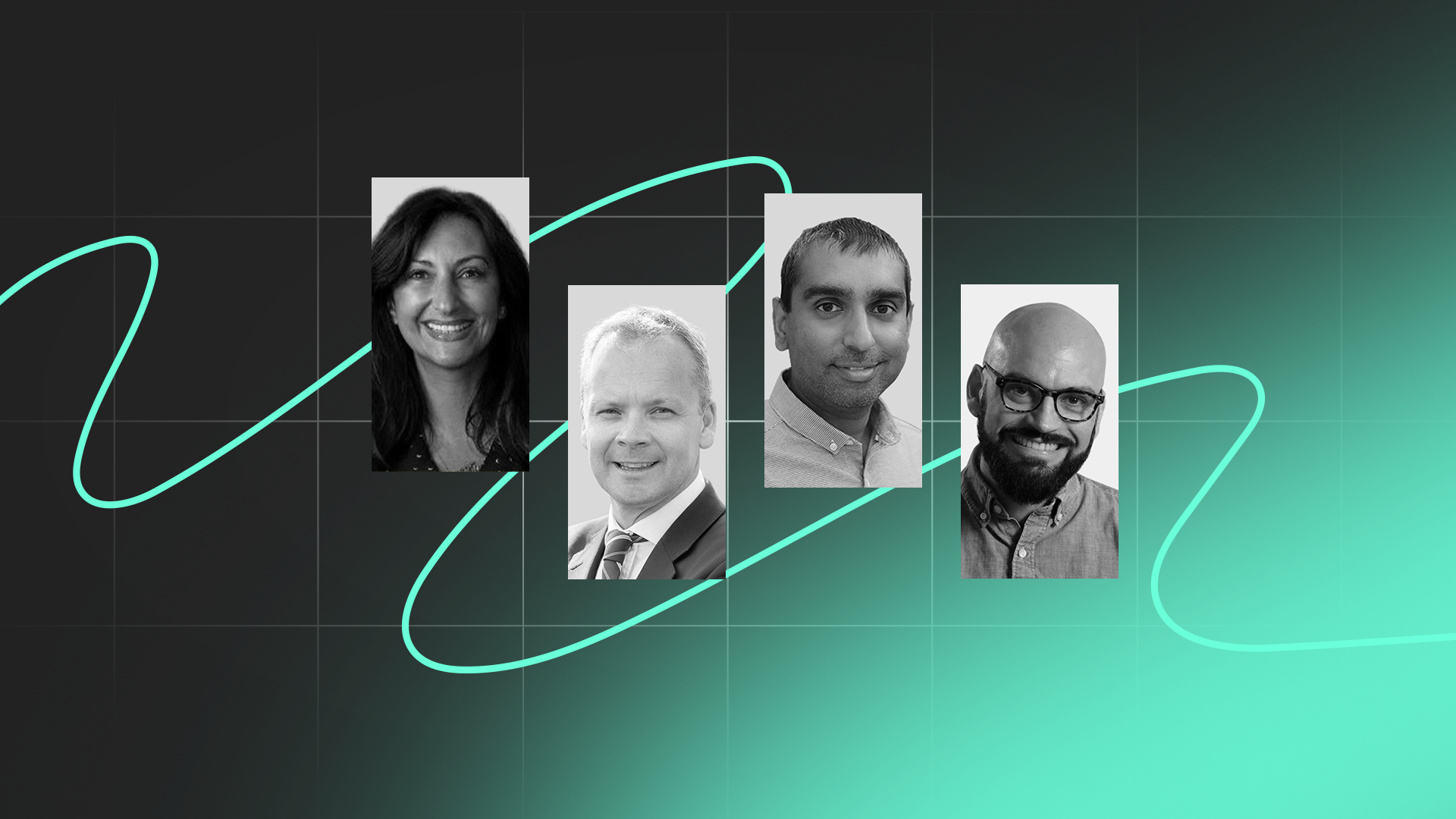
764
764. Insights: Can the UK avoid a mortgage market meltdown?
David M. Brear is joined by some great guests, from Digital Cat Consultancy, Mortgage Advice Bureau, and Sprive, to look at the current crisis facing the UK mortgage market and homeowners.

192
192. Insights: A new world of functionality - a Smart Tokens case study
EL. EF. GEE. Today we bring you: a case study on all things smart tokens. What are they? How do they work? What do they mean for web3? All this and much more on today's Blockchain Insider!

763
763. News: Buy Now Pay Later regulation shelved while Coutts faces Farage account fallout
Buy Now Pay Later regulation shelved in UK, Thunes pockets $72M, and Farage accuses Coutts of closing account over ‘values’ – Ross Gallagher and Nas Ahmad are joined by some great guests to talk about the most interesting stories in financial services over the last 7 days.

762
762. Insights: Three lessons learned from financial services in 2023 so far
Benjamin Ensor is joined by some great guests, from 11:FS, Innovate Finance, and TwentyOne to talk about the biggest lessons for financial services in the first half of 2023.

761
761. Focus: How US market turmoil can build more resilient founders
In this second episode on our monthly topic, David Barton-Grimley is joined by a fantastic guest, from QED Investors, to look at the roles and responsibilities of US VCs in the current market.

760
760. News: Public lands in the UK and Solaris raises €38 million
Investment platform Public launches in the UK, Solaris raises to focus on core values, and Martin Lewis 'sickened' by deepfake investment scam – Kate Moody is joined by some great guests to talk about the most interesting stories in financial services over the last 7 days!

759
759. Insights: Will PSD3 really live up to the expectations? (Rewind)
David M. Brear is joined by some great guests, from Plaid, Payments Solved, and The Payments Association EU, to look at the potential impact of Payment Services Directive 3 on Open Banking.


3 ways AI is shaking up UX in financial services | 11:FS Explores
The entire world is buzzing about AI, and that ain't changing anytime soon. But as AI becomes more integrated into our daily lives, what impact will it have on financial services and how people interact with them?






What are fintechs? - Decoding: Banks
Ever wanted to know what’s going on behind the scenes every time we make a payment?

How does banking regulation work? - Decoding: Banks
Regulation is essential. It stops banks from going bust or behaving badly.

How has software evolution influenced banking? - Decoding: Banks
The invention of the computer revolutionised banking in the 1950s.

How does lending work? - Decoding: Banks
Lending has been around for thousands of years and is one of the cornerstones of banking.

How can traditional banks win on the banking battlefield? - Decoding: Banks
They're down, but they're not certainly not out.

How do card networks operate? - Decoding: Banks
Mastercard and Visa are the two biggest credit card networks in the world.

How has the banking battlefield evolved? - Decoding: Banks
We kick off our Decoding: Banks series with a look at the banking landscape today and how we got here.

960
Insights: The future of Revolut with UKCEO Francesca Carlesi
The UK banking battlefield has never been more competitive. Customers expectfinancial apps that are personalised, seamless, and that genuinely make a differenc...
960
Insights: The future of Revolut with UKCEO Francesca Carlesi
960
Insights: The future of Revolut with UKCEO Francesca Carlesi
The UK banking battlefield has never been more competitive. Customers expectfinancial apps that are personalised, seamless, and that genuinely make a differenc...
960
Insights: The future of Revolut with UKCEO Francesca Carlesi
960
Insights: The future of Revolut with UKCEO Francesca Carlesi