.svg)
.svg)


Financial accessibility has long been framed as a matter of compliance or corporate social responsibility. But today, it’s emerging as something much bigger: a competitive advantage.
As fintech becomes the backbone of global financial services, the companies winning trust, expansion, and loyalty are those building products that work for everyone, regardless of ability, literacy level, or access to modern devices.
Market snapshot: Accessibility gains momentum
Accessibility is no longer a niche concern. An estimated 1.3 billion people, or about 16% of the global population, experience significant disability today. Add ageing populations, neurodiverse users, low-literacy customers, and communities with limited digital access, and accessibility becomes a universal design challenge.
For fintech, this matters. Digital adoption breaks down when users face barriers. Recent data shows:
- Voice assistant usage has more than doubled in five years.
- Screen reader reliance is growing, especially where mobile-only banking is common.
- High-contrast and simplified UX boosts task completion rates and retention.
- AI-powered summarisation and guidance improve comprehension for neurodiverse users, making financial services more accessible.
Trend watch: Accessibility innovations in fintech
Fintech’s rapid pace means accessibility improvements aren’t coming from one direction; they’re emerging across UX, AI, infrastructure, and hardware. Here are the key shifts defining the next wave of inclusive finance.
Inclusive UX & Design
The most visible evolution is in UI design. Many fintechs are rethinking what “user-friendly” really means by introducing:
- Dyslexia-friendly fonts and spacing
- Reduced cognitive complexity, with shorter steps and clearer prompts
- High-contrast themes
- Adaptive interfaces that adjust to user behaviour, age, or device capability
Complex layouts and jargon-heavy instructions disproportionately affect people with cognitive disabilities, neurodiversity, or low digital familiarity. Simplifying design doesn’t just increase accessibility - it increases conversion.
Voice-first banking
Voice is quietly becoming one of the most accessible financial technologies. For visually impaired users or elderly customers, voice-first onboarding and payments create an entirely new path to digital participation.
Innovation is accelerating through:
- Conversational AI handling everyday queries
- Voice biometrics replacing passwords
- Voice-activated card controls or payment approvals
- Multilingual voice interfaces supporting underserved communities
As trust improves and accuracy increases, voice could rival mobile apps as a mainstream access channel.
AI for cognitive accessibility
AI's impact on accessibility is enormous and still emerging. The most promising developments include:
- Automatic simplification of financial language
- Real-time translation and interpretation
- Step-by-step guidance during onboarding or disputes
- Personalised recommendations that reduce decision fatigue
Neurodiverse users, such as those with ADHD, dyslexia, or dyscalculia, benefit directly from guided experiences that help them understand complex financial actions, such as comparing loans or budgeting.
However, AI brings risks: bias, over-personalisation, or non-transparent decision-making. The firms that get it right will pair AI innovation with robust ethics and testing frameworks.
Physical accessibility in payments
Even as digital finance rises, physical experiences still matter - bank cards, terminals, ATMs, and ID verification all shape financial access.
Important innovations include:
- Tactile card notches for visually impaired users
- Contactless and mobile payments enabling greater independence
- Accessible ATM layouts and audio navigation
- Biometric authentication for people without consistent documentation
Where we're seeing real-world impact
Across the world, we’re seeing compelling examples of fintechs and banks embedding accessibility into their core value propositions.
Accessible onboarding in neobanks
Neobanks in regions such as Southeast Asia and the Middle East have been introducing accessible onboarding features such as video KYC, significantly expanding access compared to traditional verification. Others are introducing multi-lingual chatbots and simplified onboarding flows that drastically reduce abandonment rates for low-literacy customers.
Inclusive card design
Payment providers are now offering tactile cards with notches, raised dots, and cutaways, helping visually impaired customers distinguish between credit, debit, and prepaid cards. These designs have been widely celebrated and adopted across markets.
Apps built with neurodiversity in mind
Budgeting and personal finance tools are increasingly recognising neurodiversity as a mainstream need. Newer apps now include:
- Low-distraction modes: providing simplified app experiences designed to help users stay focused, avoid sensory overload, and complete key tasks without unnecessary cognitive load.
- Step-based financial tasks: making complex actions easier to complete by reducing cognitive load and guiding users through one clear, manageable step at a time.
- Visual budgets rather than text-heavy dashboards: making money management easier to understand at a glance, reducing cognitive effort and helping users quickly grasp their financial situation.
- Nudges designed to reduce overwhelm rather than gamify everything: help users stay on track without stress by encouraging action gently instead of overstimulating them with gamified prompts.
These features improve accessibility while also supporting better financial behaviour for all users.
Emerging markets leading out of necessity
In many emerging markets, accessibility is driven by a desire to design financial products that meet people where they are.
Rather than being held back by challenges such as low connectivity, lower digital or financial literacy, or limited access to bank accounts, fintechs in these regions intentionally build solutions that fit real user needs and enable broader participation in the financial system. For example:
Kuda (Nigeria): offers banking services via mobile, making banking cheaper and more accessible to people who might otherwise lack access, especially in contexts where traditional banks are costly or logistically hard to reach.
InstaPay (Egypt): enables fast, low-friction, 24/7 digital transfers across banks and mobile wallets, making cashless payments more accessible and convenient for users who face barriers with traditional banking processes.
GCash (Philippines): provides a mobile wallet for payments, transfers, savings, and credit, giving millions of unbanked and underbanked Filipinos easy access to essential financial services through their phones.
Paytm (India): provides low-cost mobile banking, digital payments, and savings tools to millions of users who previously relied on cash, expanding access in both urban and rural India.
Regulatory corner: Accessibility mandates are rising
Regulators worldwide are sharpening their focus on accessibility as part of consumer protection, digital inclusion, and vulnerability frameworks. Key developments include:
- Increasing pressure from the UK FCA’s Consumer Duty and the World Health Organisation, emphasising fair outcomes for vulnerable consumers and people with disabilities
- Global standards like WCAG 2.2 are raising the bar for digital accessibility
- Many jurisdictions, especially in the EU and other markets, are moving toward accessibility mandates for digital services, payment terminals, and financial apps.
Accessibility is not just a feature; it's a design philosophy, and increasingly, a regulatory expectation. But above all, it’s an opportunity.
The next generation of fintech leaders will be the ones who understand that accessible products aren’t just more ethical - they’re more effective. They serve more customers, build more trust, and create a greater impact. Finance should work for everyone. And accessibility is how we get there.
Now, let's take a look at some examples of fintech doing accessibility right...
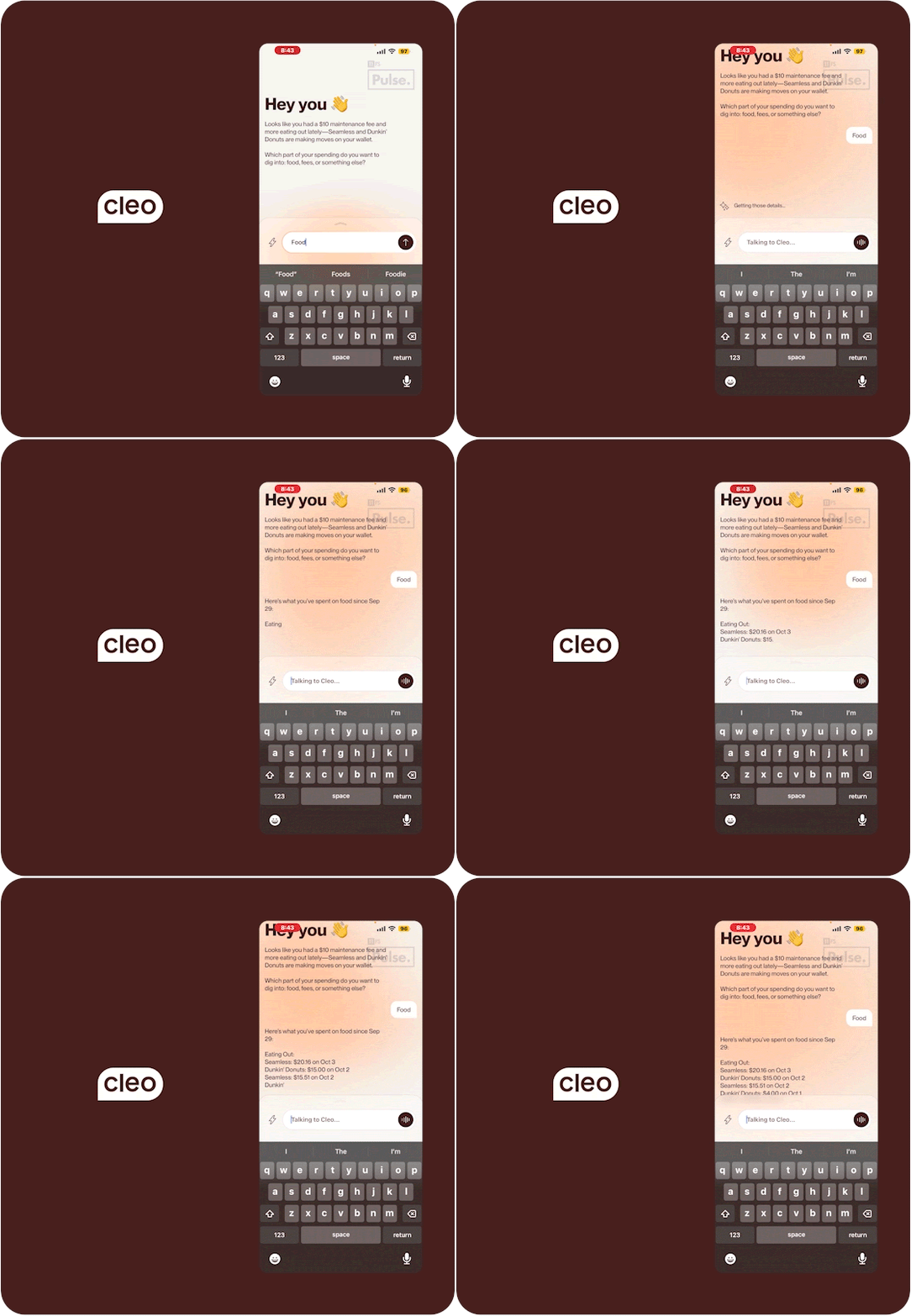
Cleo - Chatbots and AI assistance
Cleo’s chatbot elevates accessibility through intuitive voice interaction, real-time spend insights, and a warm conversational tone. Users can instantly request spend analysis and receive clear, contextualised breakdowns, while natural dialogue removes the need to navigate menus, reducing cognitive load.
Smart follow-ups like “Want to talk about ways to cut back?” keep decisions flowing, complemented by friendly microcopy that builds trust (“Hey you”). Accurate merchant categorisation boosts transparency, and speech recognition adds convenience. With automated recommendations, such as cutting back on eating out or planning grocery shops, Cleo turns raw data into genuinely actionable financial guidance.
Starling - Onboarding
Starling has created an inclusive onboarding journey that blends clarity, accessibility, and thoughtful design into a seamless first-time experience. Each step focuses on one simple action at a time, keeping the flow calm and intuitive. Users who rely on British Sign Language can complete verification through a dedicated BSL video flow, complete with clarity checks to prevent rejections.
Starling also builds trust by displaying the average 7-hour review window, so expectations are never a mystery. FSCS coverage is clearly explained for added reassurance. With light visuals, generous spacing, and friendly, jargon-free language, this journey shows how accessibility and great UX align to create a frictionless experience.

Best-in-class user experiences, at your fingertips
11:FS Pulse gives you access to over 21,000 handpicked user journeys from 850+ brands worldwide — a live, visual library of what’s working in digital banking today. Stay ahead of competitors, spot emerging trends, and cut your product research time by up to 90% - just ask Monzo.
Book your demo with our experts at 11fs.com/pulse and see what you’ve been missing.