.svg)
.svg)
.png)
For the past decade, the banking industry has been focused on developing frictionless interfaces. Financial institutions have prioritised seamless transactions, instant gratification, and engaging gamified features in a bid to build the ultimate digital financial experience.
However, instant payments have inadvertently led to a rise in scammers using social engineering techniques, such as bypassing face ID or using AI to coerce victims. In these high-pressure situations, the seamless, frictionless design of a banking app works against the customer.
The financial and psychological toll is staggering. Authorised Push Payment (APP) fraud losses hit an alarming £257.5 million in the UK in just the first half of 2025 alone, marking a 12% year-over-year increase. By the time a customer realises they are being scammed, the transfer has already cleared.
Passive, background security is no longer enough. The threat has grown so severe that by 2026, 30% of enterprises are expected to abandon standalone identity verification, like a standard face scan or static ID upload, because it is no longer considered reliable in isolation.
"A bank’s regulatory rigor and security protocols are arguably its most valuable brand assets."
Safety is the new currency
In 2026, customer priorities are shifting. Between 5% and 20% of banking customers globally are now actively considering switching their primary financial institution, specifically due to concerns over how their bank handles fraud and security. This mass migration signals a growing appetite for friction-based security.
This behavioral shift shouldn't come as a surprise. Research shows that 89% of financial services customers prioritise reliability and credibility above all other factors when choosing a financial partner, and 91% consider security and fraud protection crucial when selecting a digital banking platform.
The new competitive frontier is therefore not about removing all friction; it is about active, situational awareness that proactively protects customers. A bank’s regulatory rigor and security protocols are arguably its most valuable brand assets.
Engineering a safer future
The goal for financial institutions in 2026 is clear. The mechanisms that protect customers must become more visible and contextual.
A bank establishes itself as a trusted financial partner when it proactively warns a customer about a suspicious merchant or explicitly blocks a fraudulent transaction before it occurs.
The banks and financial institutions that take the lead in fraud prevention and understand that a seamless experience is worthless if it isn't safe will win customer trust and capture the largest market share.
How Revolut is using positive friction
Revolut has recognised this paradigm shift, rolling out two new features, ‘Street Mode’ and ‘Call Identification’, that directly respond to the growing customer demand for proactive, preventive protection. We've dived into Pulse's library of over 23,000 user journeys to show you what these experiences look like first-hand, and how they demonstrate positive friction.
Proactively protecting customers
Street Mode, launched in December 2025, acts as an anti-theft perimeter. The feature leverages real-time, location-aware AI to detect high-value transfers or changes to sensitive settings while the user is away from trusted locations, like their home or workplace.
The feature is a direct, strategic response to the surge in phone thefts and transfer muggings, where criminals coerce victims into transferring funds on the street. If a transaction is triggered outside a safe zone, Street Mode enforces a one-hour delay and an additional layer of biometric verification. This deliberate delay provides a buffer window for victims to get to safety and freeze their accounts.
.gif)
Call identification
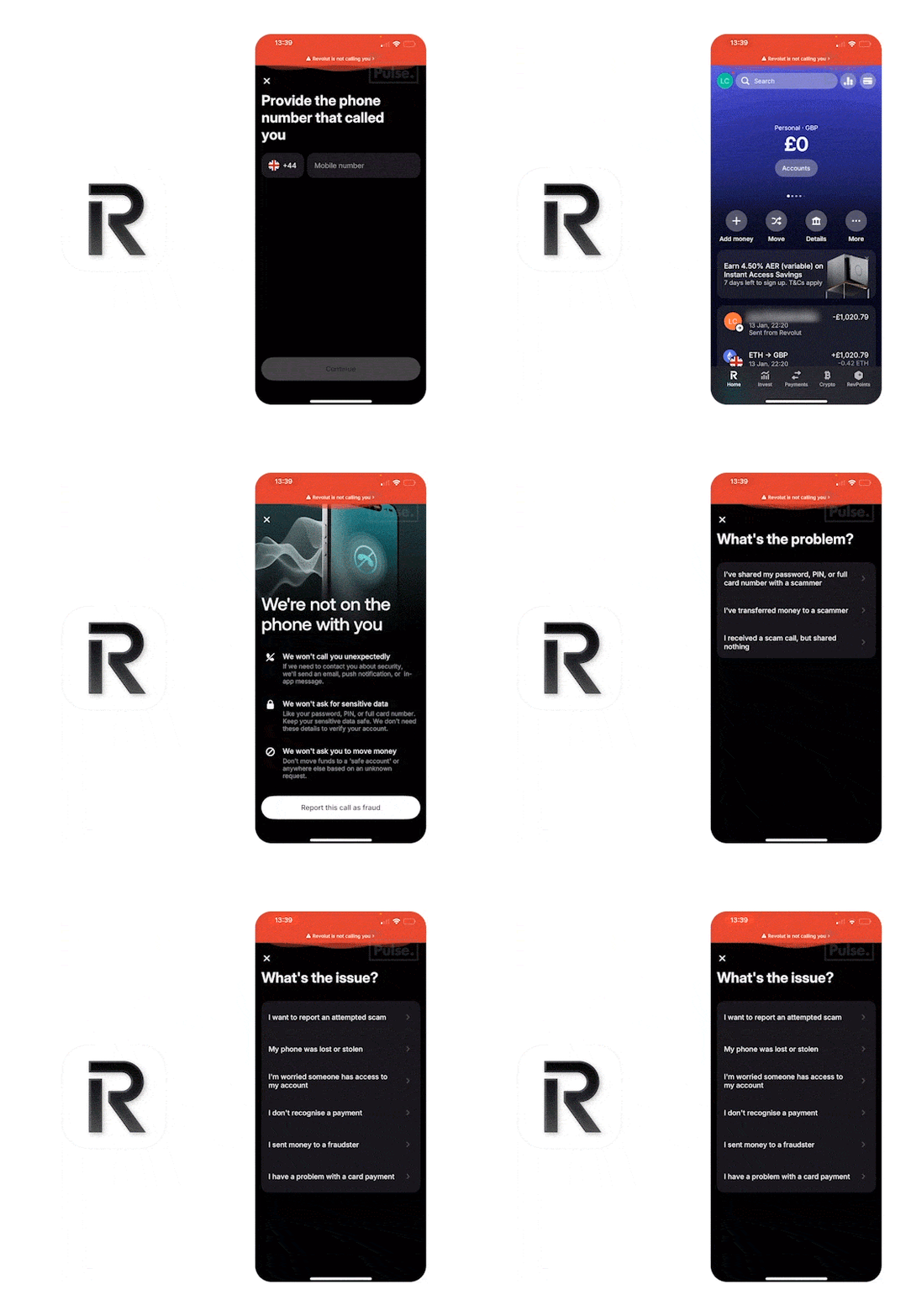
Call Identification leverages real-time device context to detect whether a user is on an active phone call while opening their Revolut app. It instantly cross-references the call to verify if the person on the other end is a genuine Revolut agent. If the caller is unverified, the app immediately triggers an urgent, high-visibility warning banner.
This positive friction deliberately interrupts the user journey to help customers when they are most vulnerable. Rather than offering reactive support in response to a scam, Revolut is proactively preventing scams from happening. By deploying features that provide zero direct revenue but offer peace of mind, Revolut is building trust through security and regulation rather than marketing gimmicks.
These are not merely technical updates; they are strategic responses to specific, growing societal anxieties.
Best-in-class user experiences, at your fingertips
11:FS Pulse gives you access to over 23,00 handpicked user journeys, including those we've shared above, from 900+ brands worldwide — a live, visual library of what’s working in digital banking today. Stay ahead of competitors, spot emerging trends, and cut your product research time by up to 90% - just ask Monzo.
Book your demo with our experts at 11fs.com/pulse and see what you’ve been missing.