.svg)
.svg)
.png)

Banking never used to be a subscription, but increasingly, that’s exactly what it’s becoming. As users are asked to pay for premium accounts, from Monzo to Revolut and traditional banks, the expectation shifts.
This isn’t just a pricing change, it’s a shift in how value has to be delivered. Because once users are paying, they’re going to want to justify it, meaning value has to be visible, relevant, and actually used.
Your bank just joined your subscriptions
Traditional current accounts were designed to be invisible. Revenue came from lending and interchange, not the account itself. Premium tiers flip that model, introducing a direct, recurring relationship where users reassess value continuously, much like Spotify or Netflix.
But banking isn’t optional, which means the sell can’t be the account itself. It has to be what the account enables:
Convenience Confidence Control
Some products are already adapting. Plum introduces premium during onboarding, positioning it as part of the core experience rather than an upgrade later. Nubank takes a similar approach with Ultravioleta, framing premium as a more complete financial setup from day one. Onboarding is no longer just activation. It’s the first moment of value justification and the start of a monthly re-evaluation loop.
The bundle problem
Most premium accounts extend beyond core banking, they’re structured as bundles. Travel insurance, breakdown cover, cashback, lounge access, subscriptions, and budgeting tools are all packaged into a single monthly fee. These bundles are often anchored around a core hook, travel insurance being a common one, with plans like Monzo Max and Nationwide’s FlexPlus leaning heavily on it to define their value.
For some users, that’s compelling. For others, much of it goes untouched.
That’s the trade-off:
+ bundling increases perceived value
− but weakens personal relevance
Some banks keep propositions more focused. Barclays and NatWest, for example, keep value relatively focused through reward-led propositions, while Revolut leans into a broader lifestyle bundle.
The result feels closer to Amazon Prime, where a few core benefits, like delivery, drive most of the value, while others, like Prime Gaming, Music, or Reading, exist but are used far less often.
So what are you actually paying for?
Most premium accounts follow a familiar structure:
- Passive protections → travel insurance, phone cover, breakdown cover
- Earned benefits → cashback, rewards, interest boosts
- Experiential perks → lounge access, subscriptions, metal cards
The challenge isn’t the features, it’s how they’re framed. Many products still rely on long, scrollable lists, but volume doesn’t equal clarity.
The shift for subscription models is moving from:
- Listing features → highlighting relevance
- Static pages → contextual surfacing
- Promised value → demonstrated outcomes
Some fintechs are closer than others. Monzo surfaces features around key moments, American Express reinforces value through real-time savings, and Capital One Venture X anchors premium in clear, upfront benefits like credits and lounge access, helping users justify the cost.
Making premium feel… premium
In a digital-first product, premium isn’t something users hold; it’s something they experience. Most benefits are low-visibility by design, appearing only at specific moments and easy to forget, creating a perception gap in which users pay for value they rarely see.
Premium used to be tangible, with metal cards signalling status, but in-app experiences now often reduce that to a label or badge. In banking, premium rarely changes the core experience, with payments, balances, and everyday interactions staying the same, making value harder to notice. If users are paying more, the experience itself has to carry the value.
The strongest approaches do this through small, deliberate cues:
- A distinct visual identity across the app (themes, colour, motion)
- Priority placement of premium features at the right moment
- Real-time value tracking (“you’ve earned £X”)
- Exclusive capabilities that change behaviour, not just add perks
- Persistent status signals across key journeys
- Contextual prompts that activate benefits when they’re relevant
These cues make premium visible in everyday use, helping users feel the difference and justify the cost.
The moment value clicks
Many premium features are used infrequently (travel insurance, lounge access, breakdown cover), making them easy to forget. The strongest experiences solve this by timing, surfacing benefits when they’re relevant, such as booking travel or approaching reward limits.
Tools like PayPal’s Honey and Klarna do this well, bringing value into the moment of action. Premier banking is starting to follow; Monzo’s nudges, Amex-style feedback, and behaviour-linked rewards from products like Chase Sapphire Reserve all point in this direction.
But there’s still a gap between access and activation.
Closing that gap means turning benefits into real-time prompts:
“You’ve used 70% of your cashback cap”
“You have lounge access for your upcoming trip”
Timing doesn’t just highlight value, it activates it.
One size doesn’t fit all
How do you fix the bundle problem?
The challenge is that value isn’t universal, it’s personal. What feels worthwhile depends on the user. A frequent traveller might prioritise travel perks, while others care more about cashback or insights. Fixed bundles keep products simple, but they struggle to reflect these different needs.
The direction is starting to shift:
- One-size-fits-all → composable value
- Fixed bundles → modular subscriptions
Some players are already exploring this. Wise charges per use, keeping value explicit and directly tied to behaviour. Current’s ‘Max’ plan introduces limited personalisation, letting users choose a set of wellness benefits while the rest remains fixed. It sits somewhere between bundled and modular value.
Together, these approaches point in the same direction, towards premium models that better reflect how people actually use and value financial products.
Paying for what you don’t use
Premium banking, like most subscriptions, relies partly on underuse. Insurance goes unclaimed, perks sit idle, and while that’s expected in many industries, in banking, it’s more complicated. Because here, underuse doesn’t just affect value, it affects trust.
Do you highlight unused benefits, prompt users to downgrade, or stay silent? There’s no easy answer. But the trade-off is clear: short-term revenue versus long-term trust.
Where premium succeeds… or fails
Premium banking isn’t just about charging users more; it’s about redefining the relationship between banks and their customers. The challenge isn’t adding more features, but making them feel relevant, timely, and connected to real behaviour.
Users aren’t subscribing to a bank account; they’re subscribing to the sense that their money is working harder, their lives are easier, and their finances are under control. And in premier banking, that value isn’t delivered once; it has to be continuously proven through every interaction.
So who’s truly delivering on the promise of Premium, beyond just listing benefits?
Let’s take a closer look on Pulse…
Monzo - Perks tab
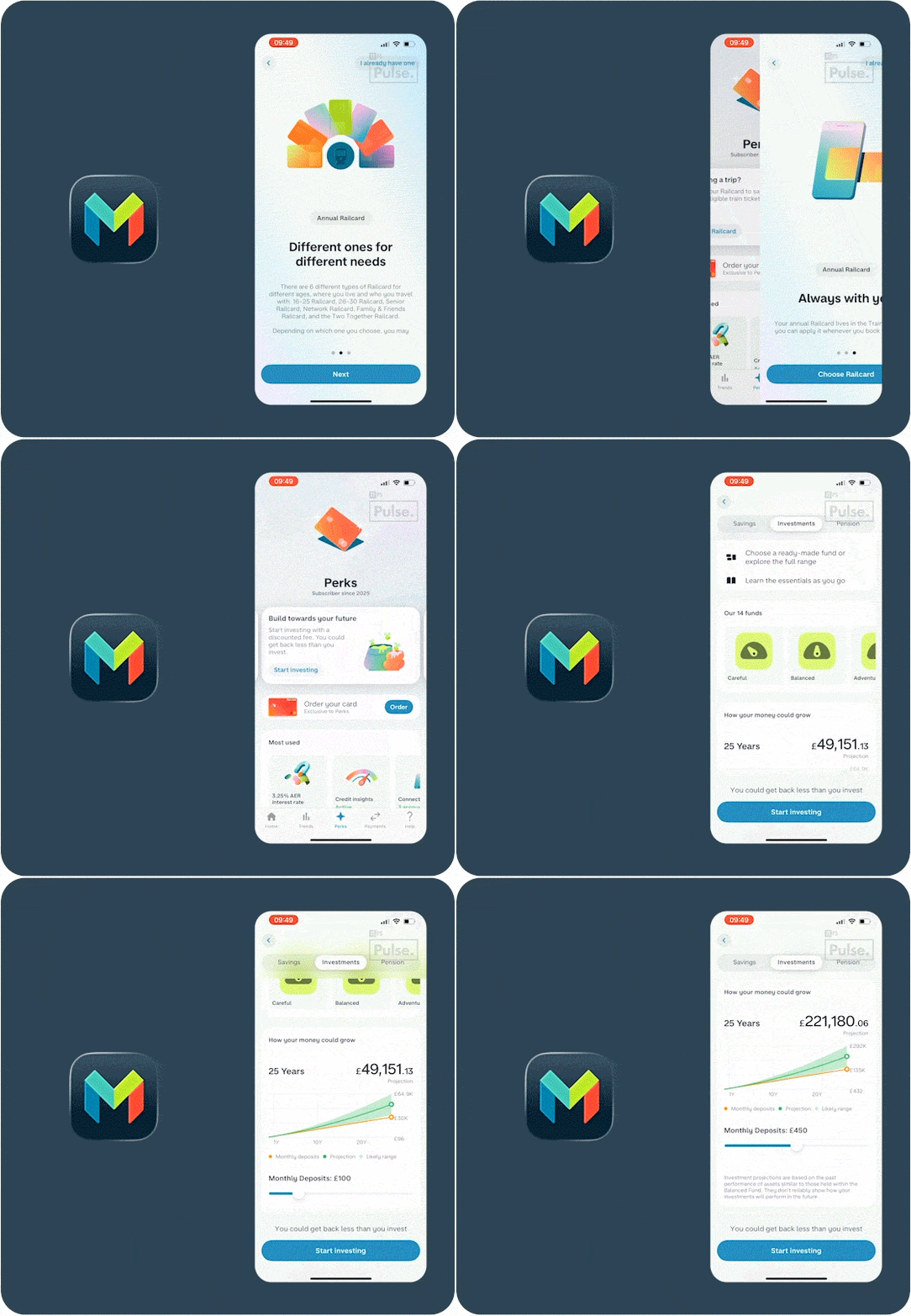
Elevates premium to a core experience → A dedicated Perks tab makes the subscription feel like a primary product, not an add-on
Makes value instantly clear → One-line explanations (“Save 1/3”, “10% off”) help users quickly understand what they’re paying for
Brings value into real-world use → Voucher flows (codes, QR, expiry) mirror how perks are actually redeemed in everyday moments
Teaches through interaction → More complex perks (like Uber or Railcards) are broken into guided steps, helping users learn as they use them
Reinforces ongoing value → Weekly, monthly, and annual rewards create a steady sense of return over time
Balances practical and emotional value → Savings justify the cost, while playful touches (like customisation) make premium feel engaging
Monese - Select a plan
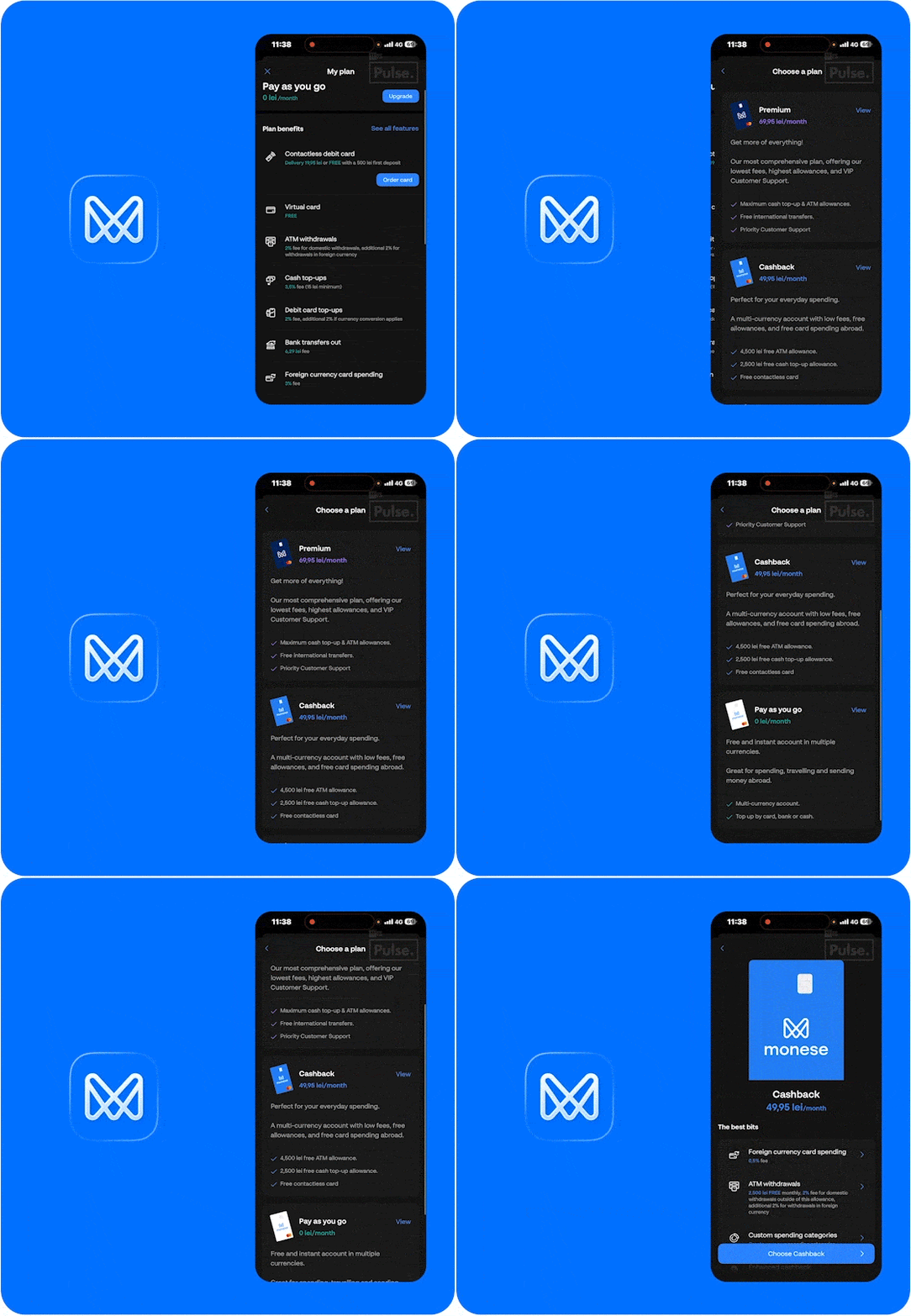
Frames premium through clear, measurable limits → Allowances (cash withdrawals, top-ups, transfers) make value easy to quantify and compare
Anchors value in everyday use → Focuses on practical use cases (spending abroad, sending money, multi-currency), keeping premium grounded in real-life needs rather than lifestyle extras
Makes tier differences instantly clear → A consistent structure (same features, higher limits) helps users quickly see what improves
Structures value clearly with “Best bits” and “All plans get” → Highlights key benefits upfront while separating shared features, making differences between plans easy to understand
Reinforces upgrades through visible constraints → Limits and fees on lower tiers clearly show what premium removes or improves
Best-in-class user experiences, at your fingertips
11:FS Pulse gives you access to over 22,000 handpicked user journeys, including those we've shared above, from 850+ brands worldwide — a live, visual library of what’s working in digital banking today. Stay ahead of competitors, spot emerging trends, and cut your product research time by up to 90% - just ask Monzo.
Book your demo with our experts at 11fs.com/pulse and see what you’ve been missing.