.svg)
.svg)


Saving money and paying bills might not sound exciting - but today’s finance apps are borrowing tricks from video games to change that. Open a modern personal finance app and you might find yourself earning points for budgeting, unlocking badges for hitting savings goals, or even “levelling up” your credit score.
This trend, known as gamification, applies game-like elements, from streaks and rewards to challenges and avatars, to the world of banking and budgeting. Fintechs are embracing these playful features as a way to stand out in a crowded market and keep users coming back.
But here’s the question: Does turning finance into a game actually teach better money skills, or just get users hooked?
What gamification looks like in fintech
In practice, gamification in finance means weaving game mechanics into financial tasks. Some common examples include:
Streaks: Apps encourage consecutive daily or weekly actions (like saving or logging in) by maintaining a streak count.
ZA Bank in Hong Kong has built highly engaging gamified flows into its app. Using check-ins, quests, and reward loops, users are encouraged to interact with the app, while personalised rewards are tailored to relevant actions like card usage or insurance-related tasks, fostering deeper ecosystem stickiness. A simple streak tracker, displayed through a daily check-in calendar, supports habit formation, and clear progress indicators (e.g. “0/5 complete”) on quest actions offer transparency and aid user planning, reinforcing the satisfaction of maintaining a streak.
Progress Bars and Goals: Users set targets (e.g. “Save $500 this month”) and see a progress bar fill up as they contribute, visualising how close they are to “winning” their goal.
UK savings app Chip introduced its WealthScore feature to gamify financial habits and encourage users to track and improve their financial position through clear progress indicators. Users also receive insights on their financial behaviour, like investment habits and tracking savings streaks, making the experience more personalised and encouraging long-term financial growth.
Badges and Achievements: Hitting milestones - first budget created, 10 on-time bill payments, a credit score increase - earns digital badges or trophies.
MoneyLion’s Achievement feature allows users to earn, track and share their milestones. The gamified reward system reinforces user activity through well-labelled and visually attractive badges, and segmented badge types (e.g., Community, Education) aid scannability and goal setting.
Levels or Points: Some apps award points for financial activities (like making a deposit or watching a tutorial), which can elevate users to new “levels” or be redeemed for perks.
Known for its “Money Missions,” GoHenry offers bite-sized lessons on topics like saving, investing, and spending wisely. Each mission, progressed with Levels, includes quizzes and animations, with badges for completion. Kids can apply what they learn directly in their account, creating a direct link between education and behaviour.
Challenges and Rewards: Fintechs introduce challenges (e.g. “no dining out for 7 days”) with rewards like cash back, discount coupons, or entries into prize draws for those who succeed.
Greenlight, a debit card and app for kids and teens, uses interactive “financial literacy games” where young users complete challenges on budgeting, saving, and investing. Parents can set tasks, and kids earn rewards for completing them. The app blends real money management with education, so every “level up” reflects a real skill learned.
"Fintech apps are driving tangible behaviour changes in everyday users"
The case for better financial literacy
As financial decisions grow more complex, many consumers struggle to manage their money effectively, with 47% of UK adults feeling overwhelmed. To address this, fintech companies are using gamification to make learning about and managing personal finance more approachable and enjoyable.
This interactive approach helps consumers build essential financial skills in a fun, motivating way, and research now offers strong, contemporary support for the effectiveness of gamified financial education.
A recent randomised controlled trial spanning four countries demonstrated that a game-based online financial education tool significantly enhanced students' financial literacy. The study involved 2,220 participants and supports the case that well-designed gamified learning has a measurable impact on financial knowledge in young people.
Similarly, a study using incentivised tasks with Gen Z participants demonstrated that raising financial literacy significantly improved both the quality and consistency of their financial decisions over time.
Outside of classrooms, fintech apps are driving tangible behaviour changes in everyday users. A systematic review published this year found that many of these platforms weave in elements like rewards, badges, leaderboards, and progress tracking. When used well, these features don’t just keep people coming back; they help reinforce healthy money habits, from building stronger savings routines to making more intentional financial decisions.
Meanwhile, a longitudinal study spanning 2015–2021 found that gamification increased user engagement by 45%, triggered a 30% rise in savings among younger users, and led to a fourfold increase in investment activity, from $50 to $200 per month. However, it also flagged a risk: users' financial confidence rose by 25% even when literacy levels remained low, underscoring the need for built-in financial education within gamified features.
The criticism of gamification
Distraction: Not everyone’s convinced gamification belongs in finance. Critics worry that gamification may do more to distract or mislead users than to educate them. One concern is that users could become fixated on in-app achievements, like maintaining a streak or earning virtual rewards, and lose sight of the real goal, which is improving their financial health. For instance, someone might be so eager to keep their savings streak unbroken that they transfer money they can’t really spare, just to get a congratulatory badge. In such cases, the game mechanics might nudge behaviour that isn’t wise outside the app’s narrow metrics.
Oversimplifying complex financial choices: A budgeting app might reward you for cutting spending in one category this week, which is good – but if that leads you to ignore a bigger-picture issue (like investing for retirement or paying down high-interest debt) because those topics aren’t as “fun,” then the gamified focus could be counterproductive. Some financial behaviours that yield the most long-term benefit (say, crafting a solid investment plan) are slow and won’t deliver the instant gratification that games thrive on. Critics worry that apps will stick to surface-level “wins” and shallow engagement rather than helping users tackle the tougher, deeper aspects of financial literacy.
Encouraging overconfidence or risky behaviour: Some gamified investment apps have faced backlash for encouraging overconfidence and risky trading, even prompting regulators to step in when designs blurred the line between motivation and manipulation. If an investing app awards points for every trade, for example, it might inadvertently encourage frequent trading (which can be costly or risky) just because the user wants the dopamine hit of levelling up. One brokerage app even removed its celebratory confetti animations after critics said they made speculative trading too addictive. The danger lies in dark patterns - features designed to keep users engaged at the expense of their long-term well-being.
Design matters - what makes it effective?
Well-designed gamification should:
- Educate and guide through realistic scenarios and feedback.
- Align with personal goals so challenges feel relevant, not random.
- Be transparent so users know what’s driving rewards and prompts.
- Reinforce positive actions without pushing risky behaviour.
The most effective apps act like a coach, supportive, informative, and motivating, rather than a casino or a competition for its own sake.
Now, let’s take a look at some examples from our 11:FS Pulse library of fintechs doing gamification right…
Greenlight - Playing and learning about taxes through gamification
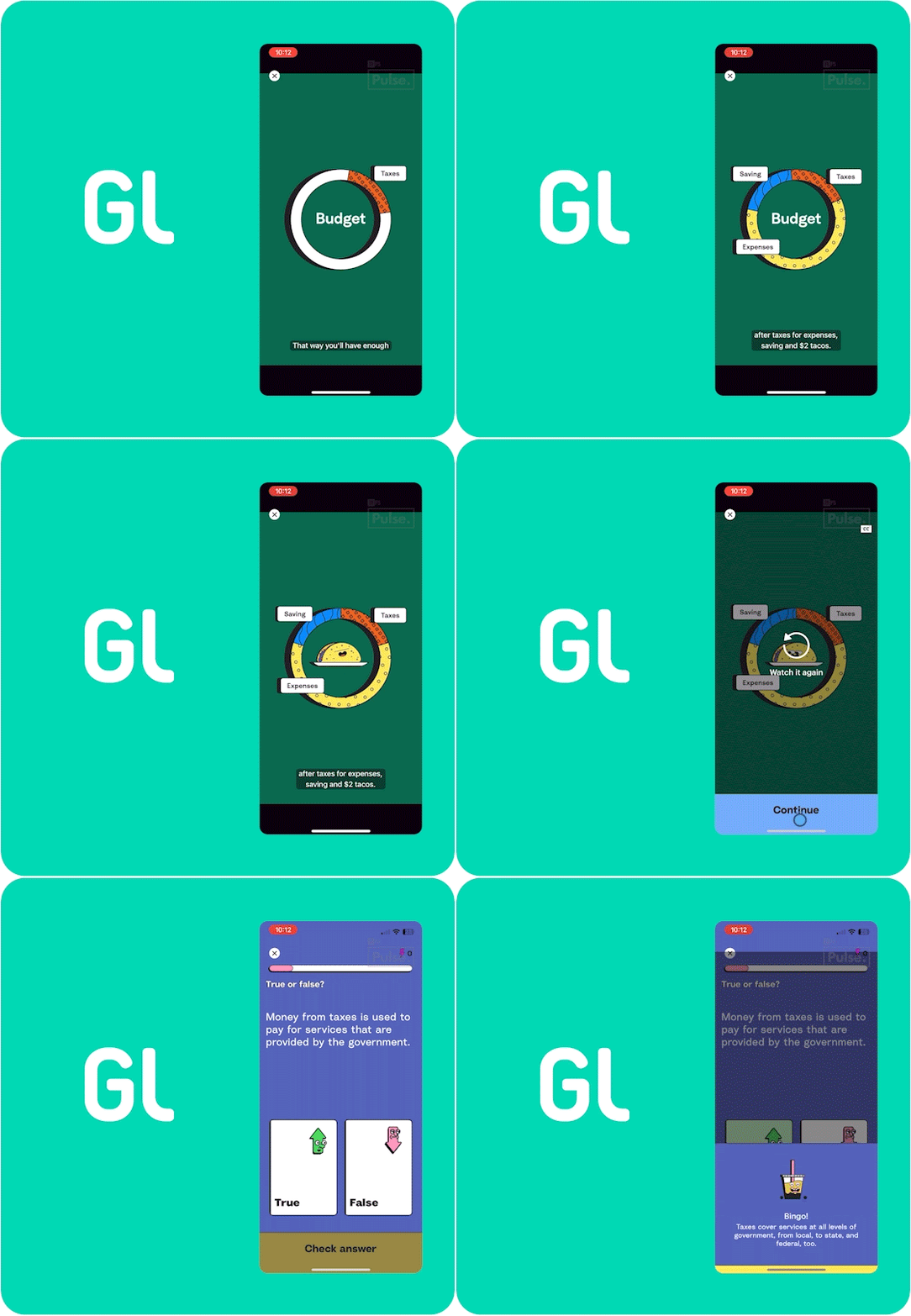
Greenlight turns learning about taxes into an engaging, interactive experience by using challenges, quizzes, and relatable real-world scenarios to keep users motivated. The structured progression, from simple tax types to more complex concepts, ensures knowledge builds gradually, while regular quizzes reinforce understanding and retention.
By connecting tax principles to everyday purchases, the experience makes financial concepts practical and easy to apply. Gamified rewards like points, stars, and XP create a sense of achievement that encourages repeat engagement.
Vibrant visuals, smooth animations, and clear content design strike the perfect balance between education and entertainment, making financial learning both effective and enjoyable for young people.
MoneyLion - Track rewards and achievements
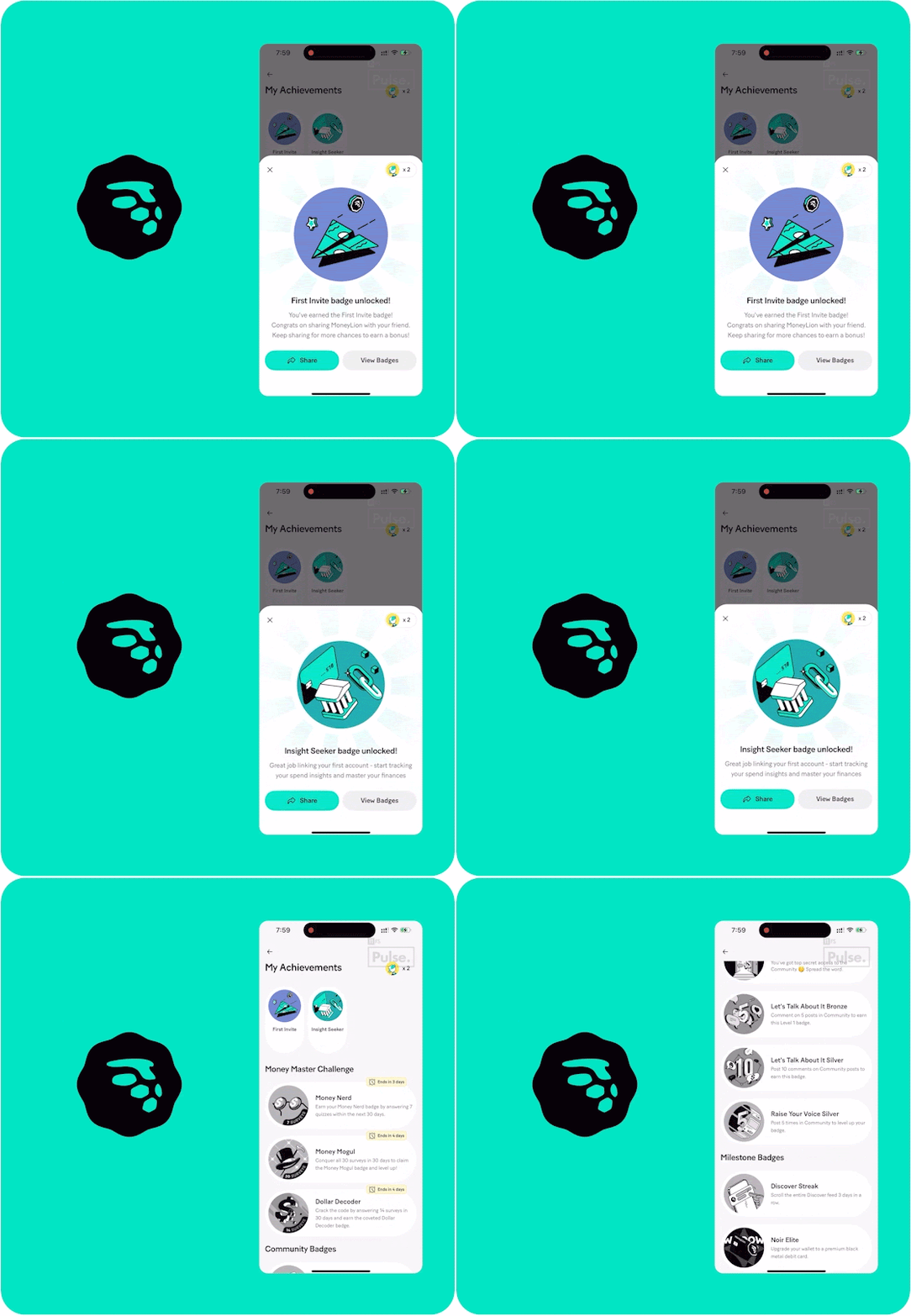
MoneyLion does gamification right through its “Achievements” feature, offering a dedicated spot for users to stay on top of their progress with milestones and sweepstakes. A visually appealing, well-labelled badge system rewards user activity, with segmented categories like Community and Education making goals clear and scannable.
The visual contrast between locked and earned badges enables quick progress tracking, encouraging users to keep participating. Celebratory illustrations and dynamic titles like “badge unlocked!” reinforce a sense of accomplishment and make the experience more rewarding.
Together, these elements blend motivation, clarity, and recognition to drive ongoing user interaction. Educational quizzes and surveys use gamification to make financial learning enjoyable and rewarding, turning complex topics into fun, interactive experiences that build lasting money skills.
Best-in-class user experiences, at your fingertips
11:FS Pulse gives you access to over 21,000 handpicked user journeys from 850+ brands worldwide — a live, visual library of what’s working in digital banking today. Stay ahead of competitors, spot emerging trends, and cut your product research time by up to 90% - just ask Monzo.
Book your demo with our experts at 11fs.com/pulse and see what you’ve been missing.
Catch you next time!