Content Hub
.svg)
.svg)
How to manage financial products in Europe, NA, Asia, and beyond.

4 fintechs and their winning social features
Once upon a time, social media and finance apps might’ve seemed like strange bedfellows.

Why is it so hard for FS companies to get tech right?
Getting tech right in banks is hard. We get this because our experts have worked in some of the biggest financial services institutions and experienced how things can be done differently. In this article, we’ll share some of the insights that we’ve learnt along the way.

4 fintechs fighting the cost-of-living crisis
Around the globe, millions are feeling the pinch as the cost-of-living crisis continues. The biggest fall in living standards since records began is forecast in the UK, while inflation rates are starting to cool after a tumultuous year across the pond.

It’s time for incumbents to invest in web3
One of the phrases you often encounter when reading things about mental health is "It's OK to not be OK." Whilst I get the sentiment, as someone who has been there, it really isn't OK. It sucks.

The next generation of financial services has to be truly inclusive
We all employ a user-centred design (UCD) approach to inform what products we build and how they should work, but all that customer insight gives us one oft-overlooked learning: the actual language customers use to speak about their problems.
Financing for app and game developers isn’t fit for purpose
As I sit here trying to write something strictly about fintech, there’s only one thing on my mind: how important it is to have an employer that truly values pregnant employees.

How is fintech helping with customer stress?
Tottenham Hotspur are completely cashless (and trophyless) at their new stadium. Lionel Messi has launched the ‘Messiverse’ in partnership with blockchain platform Ethernity. Manchester City and Laybuy have teamed up to offer a Buy Now Pay Later (BNPL) service to fans. And that’s just the tip of the iceberg.

It's time for community investing to go mainstream
Despite the global economic climate, a lot of banks and fintechs have dipped their toes into the crypto waters in recent months.

Banks: it's time to break free of your legacy tech
You don’t have to spend much time in retail banking before you come across legacy systems - a catch-all term often used to explain why banks are so slow and unresponsive.

Changing the perception of insurance
I recently heard someone suggest that ‘insurance is just like gambling.’ Bit of a stretch, but I could see their point. Both are fundamentally risk-based, and it raised an interesting question - do you ever really ‘win’ in insurance?
What use is fintech if you can't get online?
A couple of weeks ago I went into an overpriced London salad shop for lunch. Before I could part with my hard-earned money for some wilted spinach and avocado, the connection on the iPad I was ordering on went down.

Stop mistaking clever features for intelligent services
When launching a new product or improving an existing one, it's tempting for product teams to look at competitors as a starting point. But if the goal is to launch a proposition that truly solves your customers' problems, do you even need to look at your competitors in the first place?

Can circular economies do what ESG couldn’t?
This is the second article in a three-part series on how fintech for good (FFG) is helping people and the planet. The first touched on consumer behaviour. If you missed it, check it out here.

Product managers have the tools to fix ESG investing
As the saying goes, “success breeds success”. And one of the things that’s interesting in our industry is the alumni of fintechs going on to do great things. It’s no coincidence - there’s a bit of a pattern emerging: The founders of some of the most successful startups of today cut their teeth at the biggest fintechs of yesterday.

Universal crypto adoption will come down to education and design
It’s happening. After months of ‘will they, won’t they’, Monzo is heading Stateside.

1103
1103. Insights: Who’s winning the US digital banking race?
About this episode: US banking customers have more choice than ever. But does more choice mean better banking? Host Benjamin Ensor is joined by Joe Colchester, Head of Product at 11:FS Pulse, and Oliwia Wasik, Product Manager and Benchmar

1089
1089. Insights: Why does wealth management arrive too late?
About this episode: For many founders, selling a company is seen as the finish line. But some of the biggest financial decisions around an exit happen long before the deal is done - so why does wealth management so often arrive too late?

1079
1079. Insights: Robinhood, Public and the US firms leading the AI customer experience race
In this episode, we're exploring one of the biggest themes shaping financial services today: how US firms are leading the AI customer experience race.

1041
1041. Insights: How to build a high-performing product team
In this episode of Fintech Insider Insights, Kate Moody is joined by an expert panel of product leaders to unpack a question every startup and scale-up eventually faces: how do you build the dream product team?
.jpg)
1035
1035: Insights: Six predictions that will reshape customer experience in financial services
What’s next for fintech UX in 2026? Ross Gallagher, Head of Consulting at 11:FS, is joined by some great guests to break down six financial services UX predictions from the latest 11:FS Pulse Report, covering the shifts shaping digital banking, customer experience, onboarding, product design, and user research.



814
814. Insights: Our 2024 fintech predictions
Happy New Year Fin-techers! To celebrate, hosts David M. Brear, Ross Gallagher and Kate Moody make some bold fintech predictions for 2024, and look back on how right (or wrong) they were last year!

797
797. Insights: Is being a fast follower a bad thing?
11:FS CEO David M. Brear and Deputy CEO Jason Bates come together to discuss concept of fast following. Is it always a bad thing? How can you get it right, what pitfalls to avoid getting it wrong and what is the impact on the end customer?
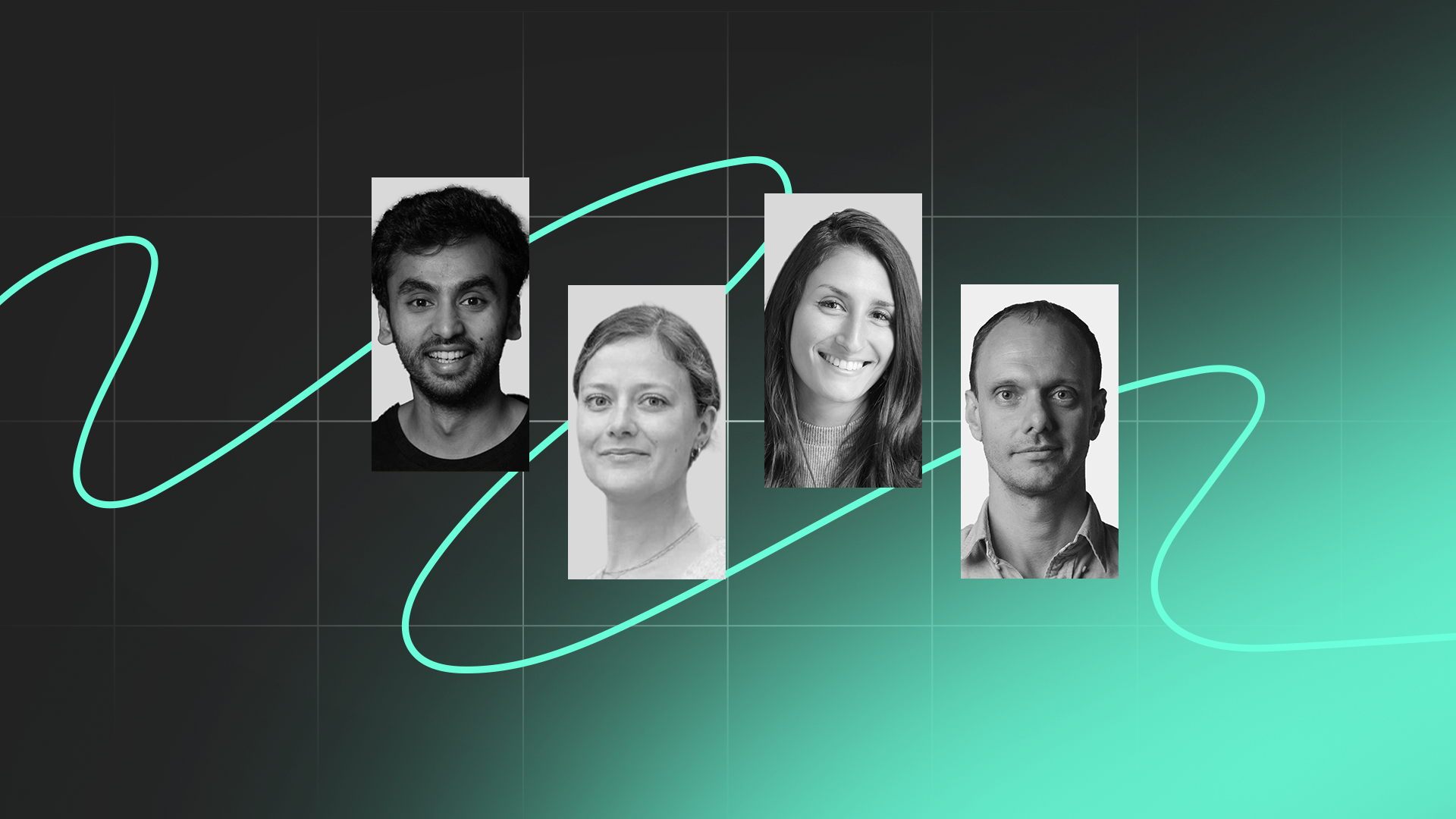
789
789. Insights: The Six Characteristics of Digital Commercial Banking
David Barton-Grimley is joined by some great guests to unpack the six characteristics of digital commercial banking; real-time, standardised, automated, embedded, contextual, and extendable. We’ll explore what they are and how they can (or can’t) support a more efficient, reliable, and secure industry.

769
769. Insights: How to build a US mobile bank
David M. Brear and Jason Bates are joined by some great guests, from Milli, to bring you this deep-dive into setting up a new banking proposition in the USA!

755
755. News: PSD3 unveils plans to shake up Open Banking
The European Union unveils new open banking rules, Wise announces bumper profits, and Robinhood buys X1 – Ross Gallagher and Benjamin Ensor are joined by some great guests to talk about the most interesting stories in financial services over the last 7 days.

742
742. Insights: How NOT to build a bank - Part I
Ross Gallagher is joined an all-star panel of Elevens for the first part of a two episode deep-dive into the battle scars picked up when building banks across the globe.

741
741. Focus: How UX is fundamental to seamless money movement
David Barton-Grimley is joined by a fantastic guest, from Wise, to continue exploring the importance of UX to the fintech revolution in Europe.

739
739. Insights: Could 'mortgages as a service' mark the future of homebuying?
Benjamin Ensor is joined by some great guests, from 11:FS, Molo Finance, Pexa UK, to discuss the possibilities of mortgages services embedded at the point of need.


How has software evolution influenced banking? - Decoding: Banks
The invention of the computer revolutionised banking in the 1950s.

Jeff Keltner from Upstart on what the future of lending will look like | Spotlight
What does the future hold for lending? Live from Lendit USA 2022.

What is UX and what makes UX good? 11:FS Explores
Will banks exist in 100 years?


960
Insights: The future of Revolut with UKCEO Francesca Carlesi
The UK banking battlefield has never been more competitive. Customers expectfinancial apps that are personalised, seamless, and that genuinely make a differenc...
960
Insights: The future of Revolut with UKCEO Francesca Carlesi
960
Insights: The future of Revolut with UKCEO Francesca Carlesi
The UK banking battlefield has never been more competitive. Customers expectfinancial apps that are personalised, seamless, and that genuinely make a differenc...
960
Insights: The future of Revolut with UKCEO Francesca Carlesi
960
Insights: The future of Revolut with UKCEO Francesca Carlesi