Content Hub
.svg)
.svg)
How are banks and fintechs planning for a digital future.

Does your bank even care that you’re rich?
I’ve been thinking about HENRYs recently. Not the Henry who asked me to marry him - I was 8, he was 5 - although he does cross my mind occasionally. HENRYs, short for ‘High Earners Not Rich Yet’, was coined as a label by Shawn Tully in 2003.

The real differentiator in financial AI won't be intelligence. It will be trust.
If you listened to the headlines, you'd think the competitive race in financial services is about one thing: building the smartest AI. We think that's the wrong way to look at it.

Banks, it’s time to decide what kind of embedded banking player you are
Embedded banking without strategic intent is expensive theatre. Lots of APIs, lots of partnership announcements, lots of pilots, but not much revenue. And that’s the risk facing corporate banks right now.
.png)
In Saudi fintech, every transaction can be a path to financial growth
As the Saudi fintech market matures, a new challenge is emerging. Most fintech interactions, whether payments, BNPL, or other services, remain fundamentally transactional.

Financial services must move beyond inertia to cultivate long-term loyalty
Loyalty is defined as “a strong feeling of support or allegiance”. However, in the context of financial services, it is more accurately defined as engineered persistence: a series of subconscious cues that steer customers toward familiar choices.

The rise of subscription banking and why it needs to fit into customers' lives
As our financial lives become more complex, there is a growing expectation for banks to offer more support, be more relevant, and generate greater everyday value. One of the clearest places this shift is starting to show up is in subscription banking.

Vertical Agentic AI is the next frontier for value creation In financial services
Most AI deployments so far have focused on AI that “talks”, which can search, summarise, and draft content to support employees. The next wave is different: AI agents that “do” are starting to take bounded actions inside workflows, moving cases forward and coordinating steps end-to-end, with humans kept in control where it matters.

Why the future of fintech depends on empowering SMBs
While consumer-focused fintech has seen waves of innovation since the early 2000s, the small and medium-sized business (SMB) sector has remained comparatively underserved.

Agentic AI is reshaping financial services
Unlocking agentic AI’s upside demands rethinking how humans and systems share control, rebuilding data and API foundations, and scaling autonomy in measured steps with rigorous human-style QA

How digital payouts offer a competitive edge to insurers
In the highly competitive insurance sector, customer experience is a critical differentiator. While insurers focus on policy features and premiums, the claims payout process is often overlooked, creating a significant point of friction.


I’ve incentivised innovation, why isn't my team innovating?
At one of our Truly Digital After Dark events, Anne Boden said “if you call yourself digital, you’re not digital”.

5 fintechs to watch in Asia
The fintech scene in Asia is booming. In recent years, the region has developed rapidly, with a diverse array of startups and established banks transforming how financial services are delivered and consumed.


How internal adoption fuels successful embedded finance solutions
Payments in the Middle East are evolving. The payments landscape in the Middle East has stood at an important tipping point for some time.







815
815. News: Should Wise be worried about Zing?
Benjamin Ensor is joined by some great guests to talk about the most interesting stories in financial services over the last 7 days, including: HSBC launch money transfer app Zing, Pave Bank launches, and the UK and Switzerland sign the Berne Financial Agreement.

814
814. Insights: Our 2024 fintech predictions
Happy New Year Fin-techers! To celebrate, hosts David M. Brear, Ross Gallagher and Kate Moody make some bold fintech predictions for 2024, and look back on how right (or wrong) they were last year!

809
809. Insights: Seeking real value in the Aussie fintech space (Rewind)
We look back to a conversation David Brear had with a panel of expert guests to discuss the future of fintech in Australia.

Bonus: David M Brear on the Wharton Fintech Podcast
David M. Brear is joined by financial services veteran, Ashok Vaswani, to discuss how he draws on his experience going forward and why he continues to put learning first.

807
807. Insights: Managing regulation without compromising innovation
David M. Brear is joined by some great guests to take a closer look at that tricky balance between managing regulation without compromising innovation in financial services.

200
200. Insights: The future of bitcoin
L.F.G. Today we bring you our 200th episode!! For this very special landmark we will be taking a look at the future of bitcoin; the developments on the Lightning Network; and the impact building on the bitcoin infrastructure will have for the future of cryptocurrency and how we interact with it. All this and much more on today's Blockchain Insider!

802
802. News: Crowdcube acquire Semper and OakNorth do business banking
Ross Gallagher is joined by some great guests to talk about the most interesting stories in financial services over the last 7 days, including: Crowdcube acquires Semper, Adyen and Plaid team up in the US, OakNorth move into business banking, and N26 pulls out of Brazil.

801
801. Insights: How does climate change impact fintechs?
Kate Moody is joined by some great guests to talk about how climate change is impacting fintechs, and how fintechs are supporting other businesses to achieve their climate goals.

800
800. News: US big banks team up to launch Paze, and Atom Bank raise £100m in equity funding
David Barton-Grimley and Kate Moody are joined by some great guests to talk about the most interesting stories in financial services over the last 7 days, including: A joint venture from the biggest US banks launch digital wallet Paze, Atom Bank raise £100m in equity funding, Railsr are making a comeback, and Deutsche are closing nearly half of their branches.
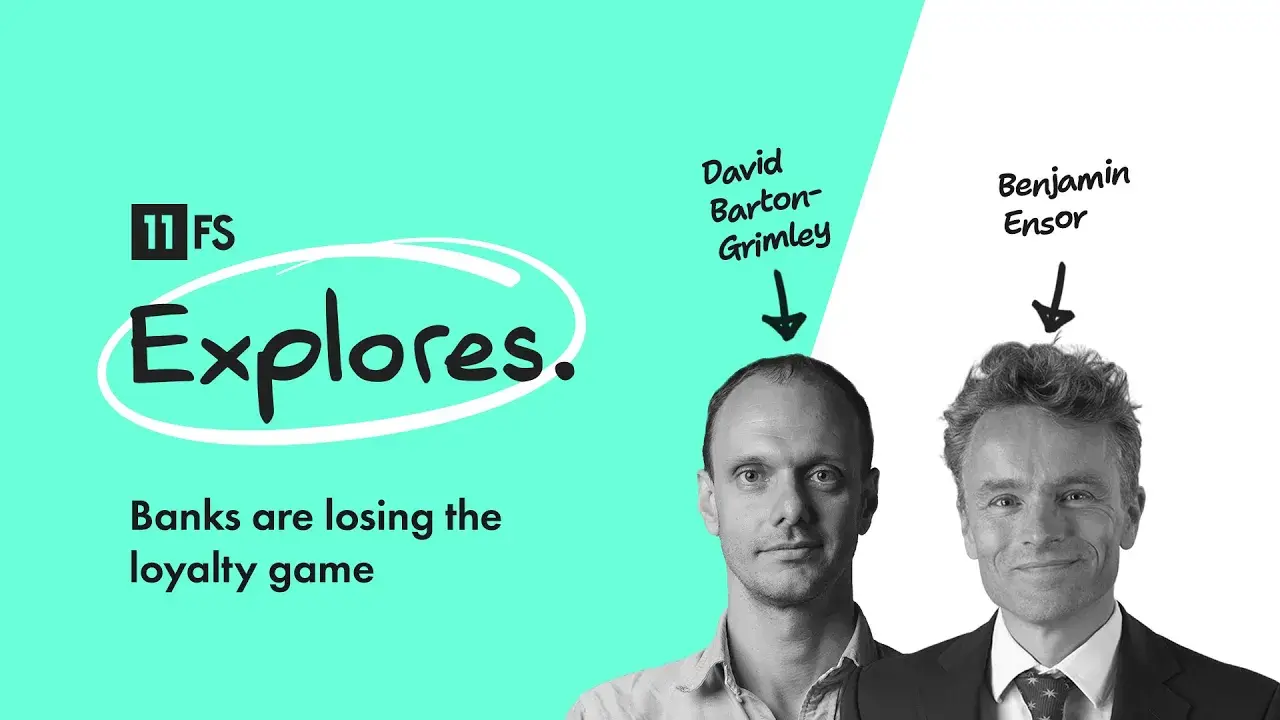
Banks are losing the loyalty game | 11:FS Explores
Hey, banks! This might sting a bit. You’re getting loyalty all wrong - and it’s costing you customers. But all is not lost!

3 ways AI is shaking up UX in financial services | 11:FS Explores
The entire world is buzzing about AI, and that ain't changing anytime soon. But as AI becomes more integrated into our daily lives, what impact will it have on financial services and how people interact with them?




How does banking regulation work? - Decoding: Banks
Regulation is essential. It stops banks from going bust or behaving badly.

How does lending work? - Decoding: Banks
Lending has been around for thousands of years and is one of the cornerstones of banking.

How do card networks operate? - Decoding: Banks
Mastercard and Visa are the two biggest credit card networks in the world.

How has the banking battlefield evolved? - Decoding: Banks
We kick off our Decoding: Banks series with a look at the banking landscape today and how we got here.

11:FS Explores: Legacy banking systems ft. David M. Brear
David M. Brear, our 11:FS CEO, takes us through legacy technology within banks - but of course, with a really cool Lightboard.


Why Homebuying is broken and how to fix it | 11:FS Explores
There are one billion people globally who can't prove their identity. That's a big problem for accessing financial services.

What Griffin are going to do now they have their banking licence with CCO Adam Moulson | Spotlight
Inclusive design is a mindset and a process that suggests that you should bring as many people as possible - and the most diverse of voices that you can - into your product design product process, so that you're being truly inclusive. It's designing with people rather that just at them. Charlotte Fereday, Product Director, Ventures, explains what inclusive design is, why it's important, how you can design more inclusively, and answers - how possible is truly inclusive design?
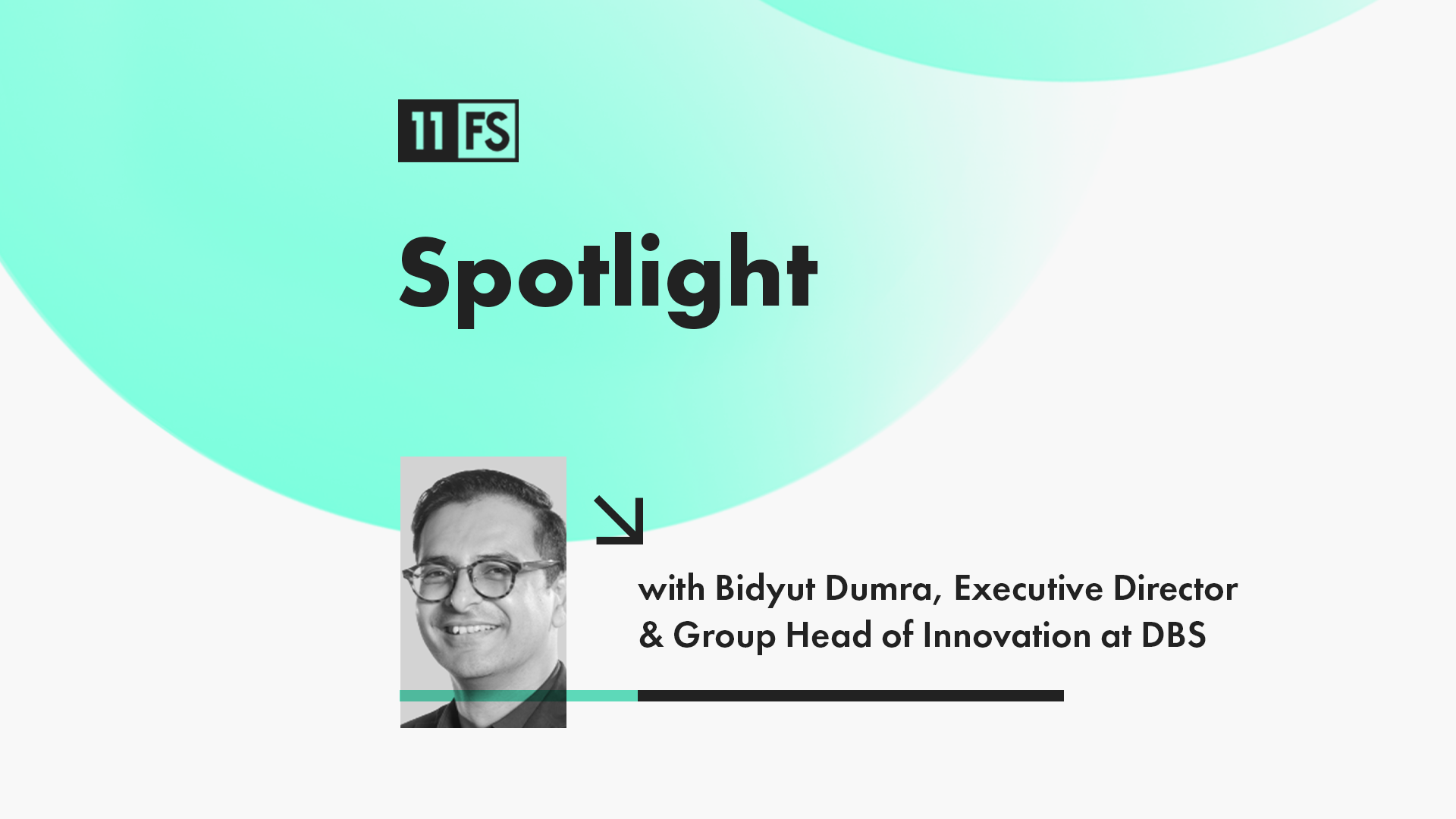
Unleashing creativity! A case study on sparking innovation with Bidyut Dumra from DBS | Spotlight
On this episode of Spotlight, 11:FS Crypto Global Strategy Director, Mauricio Magaldi is joined by Ramp Network Co-Founder and CEO, Szymon Sypniewicz. In today's chat, the pair discuss Szymon's career, the current regulatory landscape in crypto, and what the future might hold when it comes to widespread crypto adoption.

960
Insights: The future of Revolut with UKCEO Francesca Carlesi
The UK banking battlefield has never been more competitive. Customers expectfinancial apps that are personalised, seamless, and that genuinely make a differenc...
960
Insights: The future of Revolut with UKCEO Francesca Carlesi
960
Insights: The future of Revolut with UKCEO Francesca Carlesi
The UK banking battlefield has never been more competitive. Customers expectfinancial apps that are personalised, seamless, and that genuinely make a differenc...
960
Insights: The future of Revolut with UKCEO Francesca Carlesi
960
Insights: The future of Revolut with UKCEO Francesca Carlesi