Content Hub
.svg)
.svg)
Global

Banks must become active partners in financial wellbeing
Around the world, people have instant, around-the-clock access to banking apps and their own financial data. So why do so many people still feel uncertain about their financial future?
Vertical Agentic AI is the next frontier for value creation In financial services
Most AI deployments so far have focused on AI that “talks”, which can search, summarise, and draft content to support employees. The next wave is different: AI agents that “do” are starting to take bounded actions inside workflows, moving cases forward and coordinating steps end-to-end, with humans kept in control where it matters.

Accessibility in finance: Designing a future everyone can use
Financial accessibility has long been framed as a matter of compliance or corporate social responsibility. But today, it’s emerging as something much bigger: a competitive advantage.

The fight to win the salary battle
As the industry adjusts to a new digital landscape, players across the spectrum are fighting to muscle their way into the financial epicentre and ‘win’ the salary battle to become the payday home of their customers.

Personalised payments: enabling the choice and flexibility consumers expect
Consumers are evolving, and so are their expectations and demands. As the purchasing power of the younger, digital-native Gen Z and Gen Alpha grows and older generations become more comfortable with the possibilities that AI and other new technologies enable, businesses have to work harder to keep them happy and retain their business.

Gamification in fintech: Financial literacy or just engagement?
Saving money and paying bills might not sound exciting - but today’s finance apps are borrowing tricks from video games to change that.

Why the future of fintech depends on empowering SMBs
While consumer-focused fintech has seen waves of innovation since the early 2000s, the small and medium-sized business (SMB) sector has remained comparatively underserved.

Agentic AI is reshaping financial services
Unlocking agentic AI’s upside demands rethinking how humans and systems share control, rebuilding data and API foundations, and scaling autonomy in measured steps with rigorous human-style QA

How digital payouts offer a competitive edge to insurers
In the highly competitive insurance sector, customer experience is a critical differentiator. While insurers focus on policy features and premiums, the claims payout process is often overlooked, creating a significant point of friction.


I’ve incentivised innovation, why isn't my team innovating?
At one of our Truly Digital After Dark events, Anne Boden said “if you call yourself digital, you’re not digital”.
Tackling fraud in real time: balancing speed and security
The term ‘technical debt’ has been around a long time in software engineering. It shares some common characteristics with financial debt: You can accumulate it, you can ‘pay it off’.

5 fintechs to watch in Asia
The fintech scene in Asia is booming. In recent years, the region has developed rapidly, with a diverse array of startups and established banks transforming how financial services are delivered and consumed.

How internal adoption fuels successful embedded finance solutions
Payments in the Middle East are evolving. The payments landscape in the Middle East has stood at an important tipping point for some time.

474
474. Insights: Cyber Security - what are the biggest threats?
Sarah Kocianski is joined by some great guests to talk about cybersecurity in financial services.

473
473. News: Stripe acquires Paystack - are they taking over the world?
Simon Taylor and Mel Stringer are joined by some great guests to talk about some of the most interesting stories of the last 7 days, including: Stripe acquires Nigeria’s Paystack, Marqeta’s research discovers Covid-19 has forced three-quarters of banks to change their future strategy, and ESG funds forecast to outnumber conventional funds by 2025.

472
472. Insights: Open Banking two years on - how far have we come?
Sarah Kocianski is joined by some great guests to talk about Open Banking two years on and the key developments that have been made since then.
77
77. News: Lloyd's post-pandemic product review & Cover Genius' raise
Sarah Kocianski and Nigel Walsh are joined by a panel of guests to talk through the most interesting news from the insurance and insurtech sphere!

75
75. News: High Court tells SMB insurers to pay up
David Brear and Nigel Walsh are joined by a panel of guests to talk through xxx. All this and much much more on today's Insurtech Insider!

462
462. Insights: How can public cloud drive business transformation?
David Brear is joined by some fantastic experts from IBM to discuss the opportunities that public cloud offer for business transformation in financial services.

461
461. News: Banks tackle deepfraud and RTGS collaborates with Microsoft
Sam Maule and Sarah Kocianski are joined by some great guests to talk about some of the most interesting stories of the last 7 days, including: RTGS Global rolls out stage 1 of liquidity visibility network in collab with Microsoft, banks work with fintechs to counter ‘deepfake’ fraud, and Paypal terminates accounts linked to a Russian influence operation.

460
460. Insights: Is crypto becoming mainstream?
Simon Tayor is joined by some special guests to talk about the growth cryptocurrencies in mainstream finance.

74
74. Digital transformation - Managing the hybrid
Sarah Kocianski and Nigel Walsh are joined by some amazing guests to talk through digital transformation in the insurance industry.

459
459. News: Paypal take on Klarna and Afterpay; Vipps and Visa team up & Chip’s new raise
David Brear and Mel Stringer are joined by some great guests to talk about some of the most interesting stories of the last 7 days, including: More raises as Chip launches Series A, Paypal is coming for Klarna and AfterPay, and Goldman Sachs launches its own font: Goldman Sans.

456
456. Insights: Truly Digital After Dark
This week we bring you our first-ever, Truly Digital After Dark! In the sound of the times, we have not only turned our fantastic After Dark show Truly Digital, but we also bring you insights as to how digital is currently shaping the financial industries!

73
73. News: Lemonade post a positive Q2 as Zurich struggles with the pandemic
Sarah Kocianski and Nigel Walsh are joined by a panel of guests to talk through the latest news in the insurance and insurtech space!

454
454. Insights: Digital Investing - the importance of education and community
Simon Taylor is joined by some great guests to talk about digital wealth managers and how these have disrupted the market with their new and educational investment tools.

453
453. News: Can F2 solve Facebook’s problems & will Amex buy Kabbage?
Sam Maule and Sarah Kocianski are joined by some great guests to talk about some of the most interesting stories of the last 7 days in US financial services and beyond including: Facebook rolls out its Facebook Financial Initiative; AmEx in talks to buy Kabbage and Robinhood blows past rivals in day trades, and much much more!

452
452. Insights: Banking as a Service - the tech behind fintech
Simon Taylor is joined by some great guests from two of the biggest banking as a service providers from both sides of the Atlantic, GPS and Galileo, to lift the lid on this industry niche that's blowing up right now
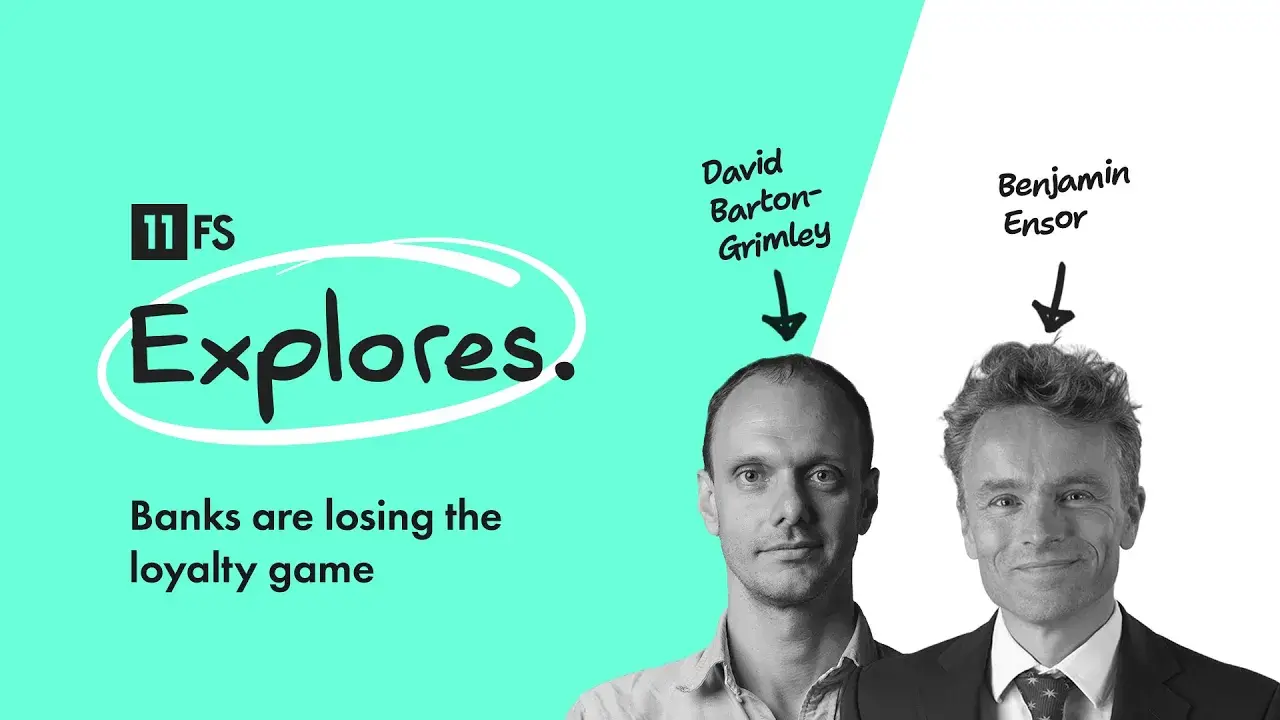
Banks are losing the loyalty game | 11:FS Explores
Hey, banks! This might sting a bit. You’re getting loyalty all wrong - and it’s costing you customers. But all is not lost!
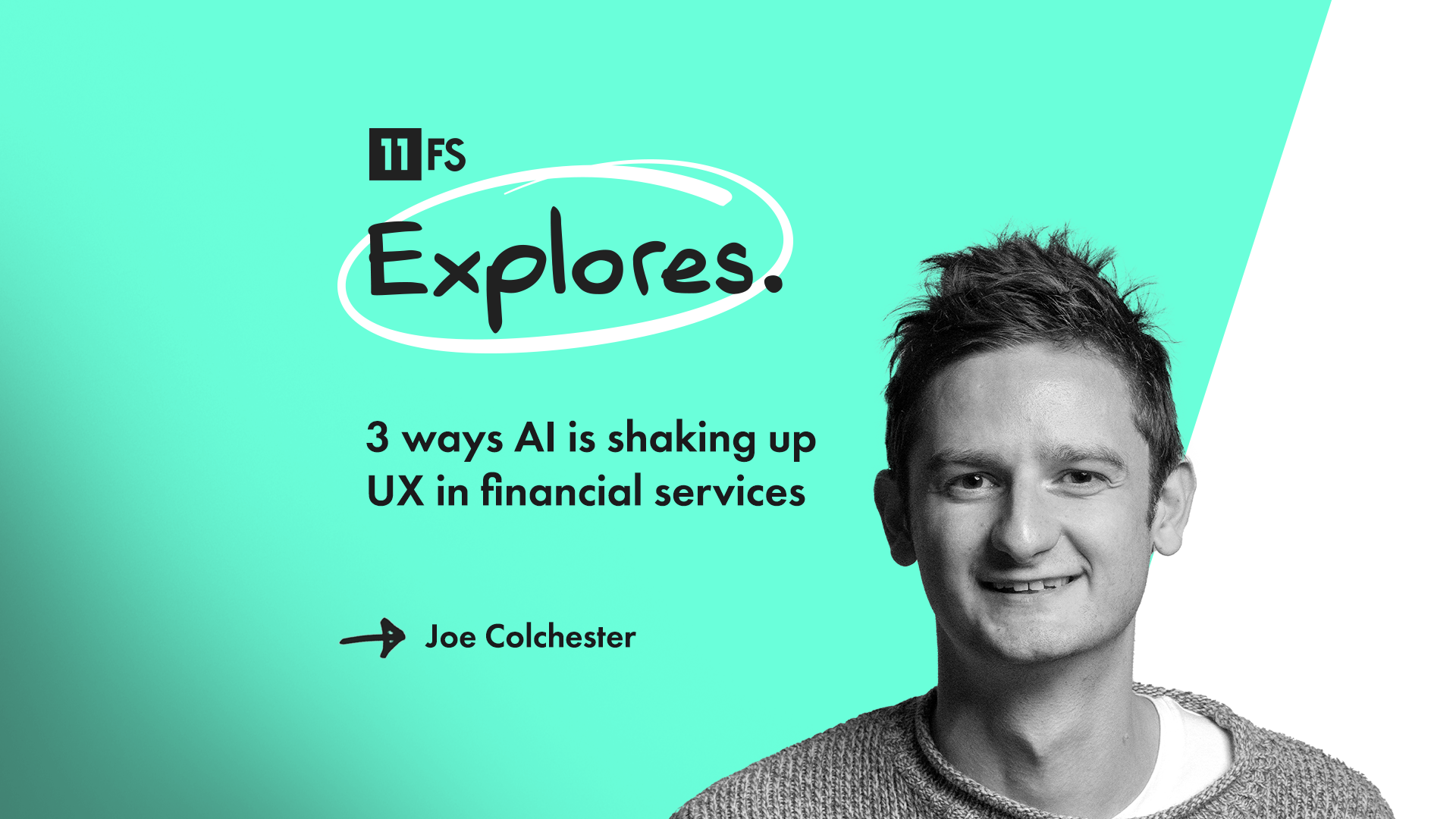
3 ways AI is shaking up UX in financial services | 11:FS Explores
The entire world is buzzing about AI, and that ain't changing anytime soon. But as AI becomes more integrated into our daily lives, what impact will it have on financial services and how people interact with them?
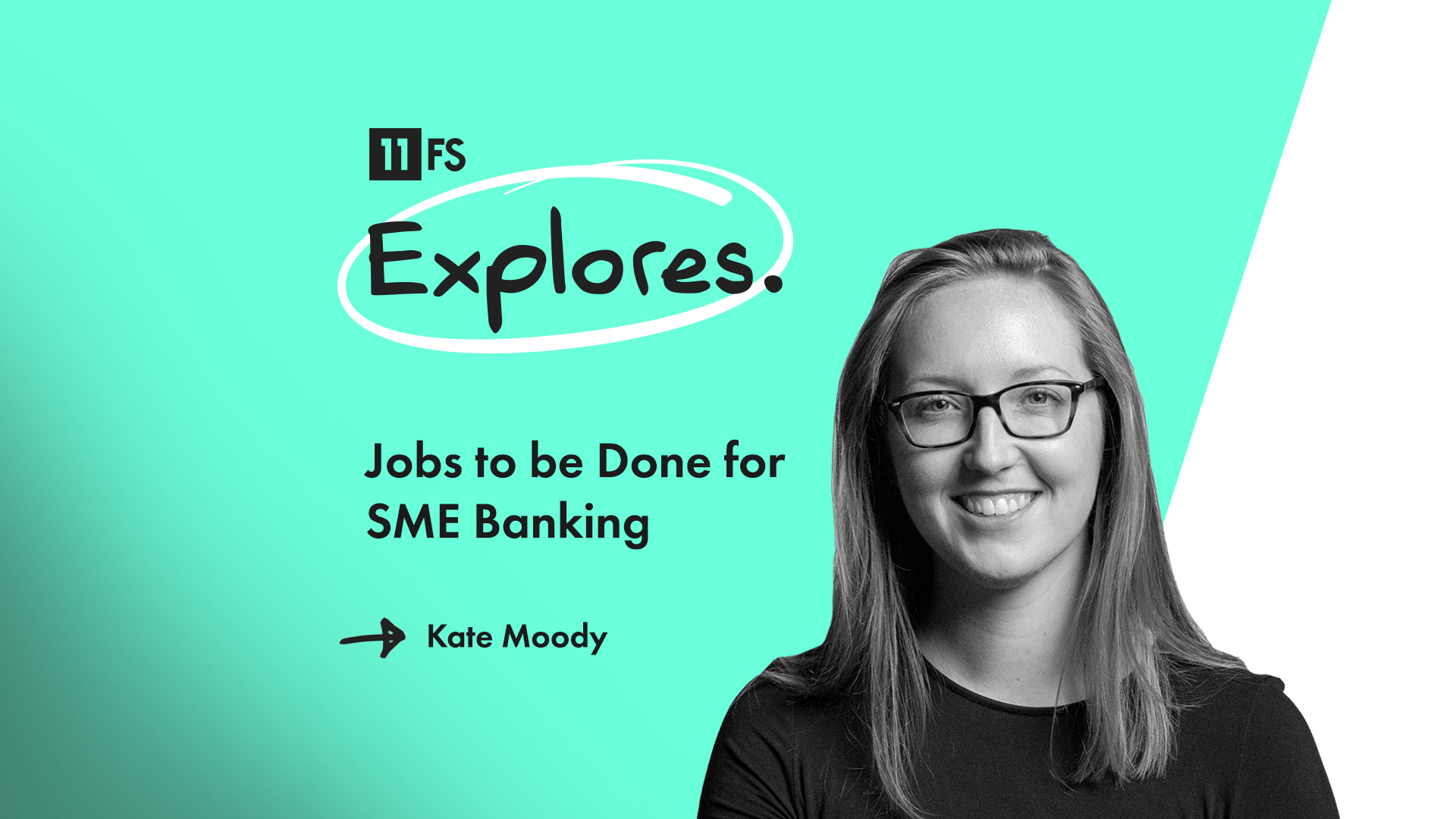
Using Jobs to be Done to revolutionise SME Banking | 11:FS Explores
It's not just a buzzword.




What are fintechs? - Decoding: Banks
Ever wanted to know what’s going on behind the scenes every time we make a payment?

How does banking regulation work? - Decoding: Banks
Regulation is essential. It stops banks from going bust or behaving badly.

How has software evolution influenced banking? - Decoding: Banks
The invention of the computer revolutionised banking in the 1950s.

How does lending work? - Decoding: Banks
Lending has been around for thousands of years and is one of the cornerstones of banking.

How can traditional banks win on the banking battlefield? - Decoding: Banks
They're down, but they're not certainly not out.

How do card networks operate? - Decoding: Banks
Mastercard and Visa are the two biggest credit card networks in the world.

How has the banking battlefield evolved? - Decoding: Banks
We kick off our Decoding: Banks series with a look at the banking landscape today and how we got here.

960
Insights: The future of Revolut with UKCEO Francesca Carlesi
The UK banking battlefield has never been more competitive. Customers expectfinancial apps that are personalised, seamless, and that genuinely make a differenc...
960
Insights: The future of Revolut with UKCEO Francesca Carlesi
960
Insights: The future of Revolut with UKCEO Francesca Carlesi
The UK banking battlefield has never been more competitive. Customers expectfinancial apps that are personalised, seamless, and that genuinely make a differenc...
960
Insights: The future of Revolut with UKCEO Francesca Carlesi
960
Insights: The future of Revolut with UKCEO Francesca Carlesi