Content Hub


Global

Banks must become active partners in financial wellbeing
Around the world, people have instant, around-the-clock access to banking apps and their own financial data. So why do so many people still feel uncertain about their financial future?

Vertical Agentic AI is the next frontier for value creation In financial services
Most AI deployments so far have focused on AI that “talks”, which can search, summarise, and draft content to support employees. The next wave is different: AI agents that “do” are starting to take bounded actions inside workflows, moving cases forward and coordinating steps end-to-end, with humans kept in control where it matters.

Accessibility in finance: Designing a future everyone can use
Financial accessibility has long been framed as a matter of compliance or corporate social responsibility. But today, it’s emerging as something much bigger: a competitive advantage.

The fight to win the salary battle
As the industry adjusts to a new digital landscape, players across the spectrum are fighting to muscle their way into the financial epicentre and ‘win’ the salary battle to become the payday home of their customers.

Personalised payments: enabling the choice and flexibility consumers expect
Consumers are evolving, and so are their expectations and demands. As the purchasing power of the younger, digital-native Gen Z and Gen Alpha grows and older generations become more comfortable with the possibilities that AI and other new technologies enable, businesses have to work harder to keep them happy and retain their business.

Gamification in fintech: Financial literacy or just engagement?
Saving money and paying bills might not sound exciting - but today’s finance apps are borrowing tricks from video games to change that.

Why the future of fintech depends on empowering SMBs
While consumer-focused fintech has seen waves of innovation since the early 2000s, the small and medium-sized business (SMB) sector has remained comparatively underserved.

Agentic AI is reshaping financial services
Unlocking agentic AI’s upside demands rethinking how humans and systems share control, rebuilding data and API foundations, and scaling autonomy in measured steps with rigorous human-style QA

How digital payouts offer a competitive edge to insurers
In the highly competitive insurance sector, customer experience is a critical differentiator. While insurers focus on policy features and premiums, the claims payout process is often overlooked, creating a significant point of friction.


I’ve incentivised innovation, why isn't my team innovating?
At one of our Truly Digital After Dark events, Anne Boden said “if you call yourself digital, you’re not digital”.

Tackling fraud in real time: balancing speed and security
The term ‘technical debt’ has been around a long time in software engineering. It shares some common characteristics with financial debt: You can accumulate it, you can ‘pay it off’.

5 fintechs to watch in Asia
The fintech scene in Asia is booming. In recent years, the region has developed rapidly, with a diverse array of startups and established banks transforming how financial services are delivered and consumed.

How internal adoption fuels successful embedded finance solutions
Payments in the Middle East are evolving. The payments landscape in the Middle East has stood at an important tipping point for some time.
23
23. Bitcoin goes stratospheric, Ethereum Cryptokitties and R3 CEO interview
Coling G Platt is actually in the building this week to join Simon Taylor for the week's top news and a very special interview with R3's David Rutter.
5
5: Insurance as a platform
This week David is joined by longtime friend of 11:FS, Sarah Kocianski, and James York, Founder of Worry+Peace, to discuss insurance as a platform, and we also speak to Sascha Wischek, CEO of Fjuul.
22
22. Can Bitcoin really hit $100,000?
Simon and Colin discuss Bitcoin highs, Ether bonds, rogue ICOs, and much more. Plus, a special interview with Commissioner Brian Quintenz from the CFTC and a discussion on ICOs recorded live from RegTech Rising.
156
156. News: Growing through pain
David, Jason and Simon are joined by Ali Paterson, Valentina Kristensen & Tanya Andreasyan for a look back over the week's news.
155
155. Insights: New ways of working
In this Insights episode, David recorded live from the Tavern Stand at Lords Cricket Ground to explore new ways of working, with Andy Ellis and Peter Ryan-Bell from RBS, and Tunde Olanrewaju from McKinsey.
154
154. News: Winefield
This week very special friend of the show Sarah Kocianski is in the hosting seat as neither David, Jason and Simon were available this week. She is joined by guests including Anna Bennett, Nina Mohanty, Liz Lumley and Sophie Winwood.
20
20. The greatest (bitcoin) story ever told!
Simon Taylor and the birthday boy Colin G Platt (still enjoying the beach in sunny Australia) cover the best of the week's news, including the death of SegWit2x, the surge in Bitcoin Cash and the latest on the parity hack. Plus interviews with Michael Casey, advisor, author, speaker and commentator, and Daniel Cotti and David Sutter from TradeIX.
153
153. Insights: The future of banking and disruption
This week we bring you a very special Insights show, recorded live at BBVA's Global Summit in Madrid, where Simon Taylor hosts a panel to discuss the future of banking and disruption with Marko Wenthin, Leanne Kemp, and Elena Alfaro.
152
152. News: High Rate of Return
David, Jason, and Simon are joined by Fluidly Founder, CEO and OBE Caroline Plumb, and CEO and Founder of Norio Ventures, Pete Townsend for this week's news!
151
151. Interview: Amber Baldet
This week, Sam Maule talks to the wonderful Amber Baldet, Executive Director and Blockchain Programme Lead at J.P. Morgan.
19
19. The prequel to the greatest (bitcoin) story ever told
Simon and Colin bring you another packed show covering the week's topsy turvy news, including SegWit2x, more on Bitcoin prices, Colin's long thing and some fantastic guests talking e-sports.
150
150. Fintech Insider: After Dark II
This week is an extremely special Halloween episode: After Dark II recorded in front of a live studio audience from our home at WeWork in Aldgate, London, and we're celebrating an important milestone; it's episode number 150!
149
149. Interview: Liesbeth Rigter, MoneYou & Eric Mouilleron, Bankable
In a special interview this week, David speaks to Liesbeth Rigter, CEO at MoneYou and Eric Mouilleron, CEO at Bankable, about their partnership and their plans for the future.
148
148. Live from Xerocon: part 2
David introduces the second installment from our trip to Xerocon 2017, featuring Edward Berks, Director of Sales, Banking and Fintech at Xero, Ian Christie, CEO at Boma Technologies, Margaret Laidlaw, Partner at Mazars, Mark Sykes, Partner at BDO and Anna Curzon, Chief Partner Officer at Xero.
18
18. Bitcoin soaring, plus ICOs, hipsters and Tezos
This week, Simon and Colin catch up and the weeks news and talk to Stephen Palley, Software Development Lawyer, and Jeff Bandman, Principal at Bandman Advisors and former CFTC Fintech Advisor.
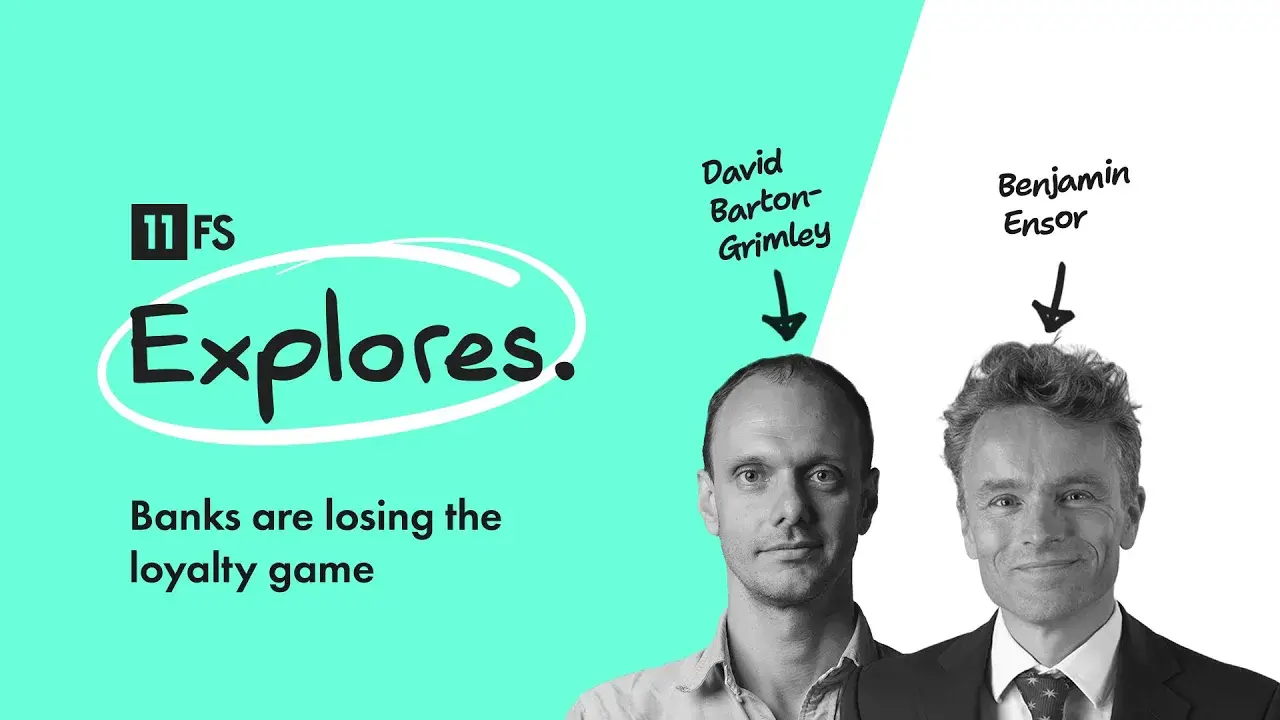
Banks are losing the loyalty game | 11:FS Explores
Hey, banks! This might sting a bit. You’re getting loyalty all wrong - and it’s costing you customers. But all is not lost!
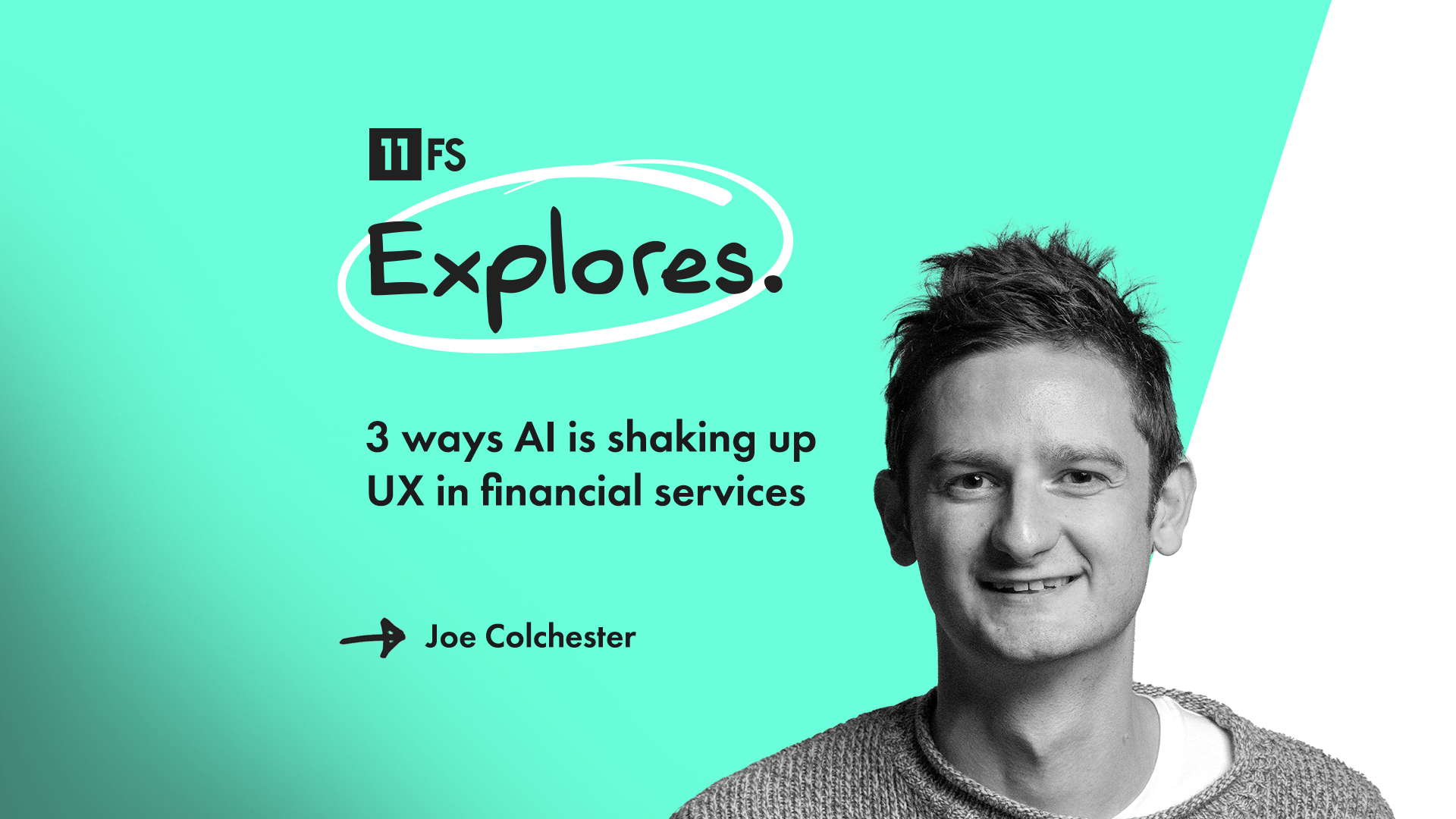
3 ways AI is shaking up UX in financial services | 11:FS Explores
The entire world is buzzing about AI, and that ain't changing anytime soon. But as AI becomes more integrated into our daily lives, what impact will it have on financial services and how people interact with them?
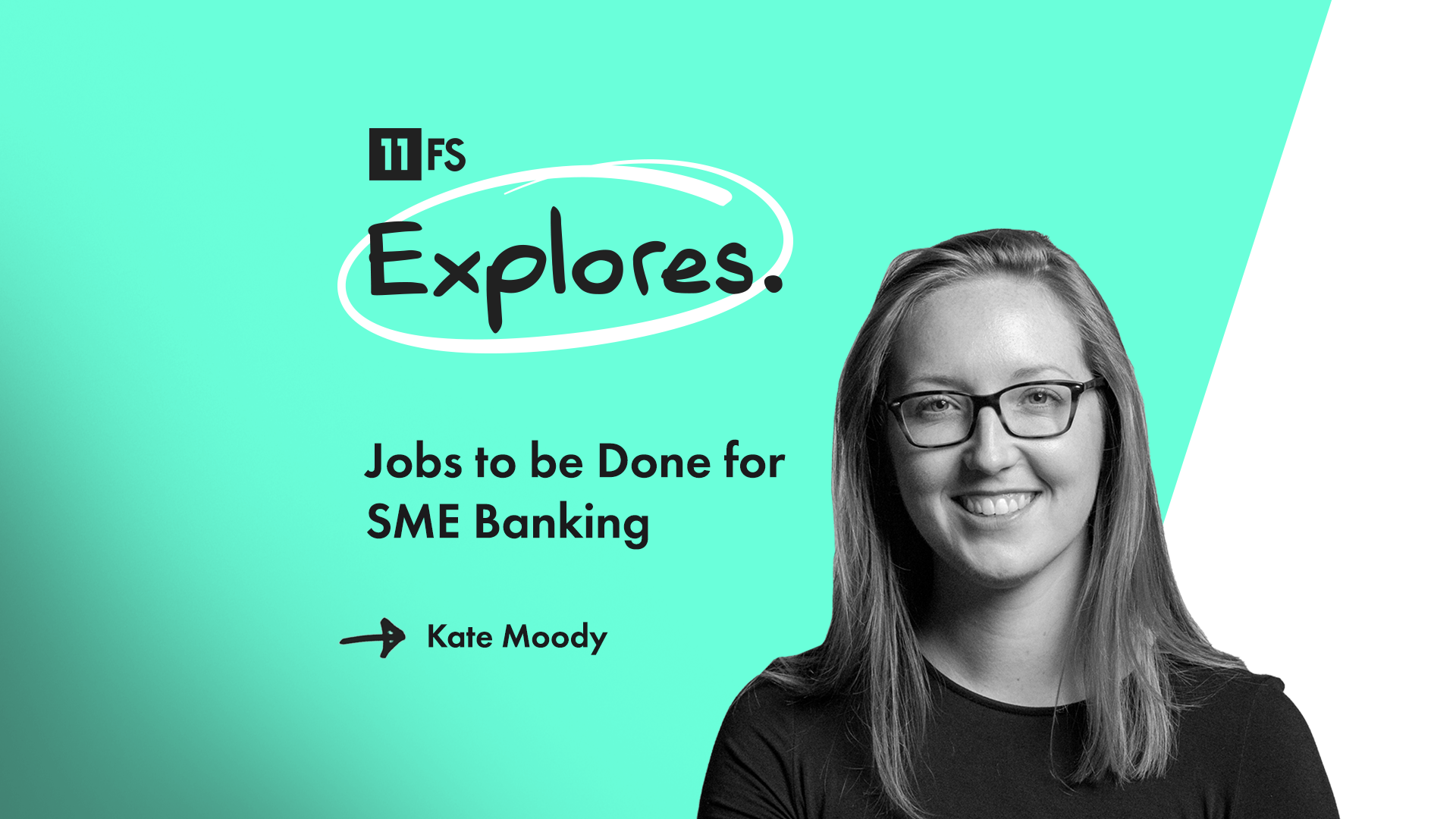
Using Jobs to be Done to revolutionise SME Banking | 11:FS Explores
It's not just a buzzword.





What are fintechs? - Decoding: Banks
Ever wanted to know what’s going on behind the scenes every time we make a payment?

How does banking regulation work? - Decoding: Banks
Regulation is essential. It stops banks from going bust or behaving badly.

How has software evolution influenced banking? - Decoding: Banks
The invention of the computer revolutionised banking in the 1950s.

How does lending work? - Decoding: Banks
Lending has been around for thousands of years and is one of the cornerstones of banking.

How can traditional banks win on the banking battlefield? - Decoding: Banks
They're down, but they're not certainly not out.

How do card networks operate? - Decoding: Banks
Mastercard and Visa are the two biggest credit card networks in the world.

How has the banking battlefield evolved? - Decoding: Banks
We kick off our Decoding: Banks series with a look at the banking landscape today and how we got here.

960
Insights: The future of Revolut with UKCEO Francesca Carlesi
The UK banking battlefield has never been more competitive. Customers expectfinancial apps that are personalised, seamless, and that genuinely make a differenc...
960
Insights: The future of Revolut with UKCEO Francesca Carlesi
960
Insights: The future of Revolut with UKCEO Francesca Carlesi
The UK banking battlefield has never been more competitive. Customers expectfinancial apps that are personalised, seamless, and that genuinely make a differenc...
960
Insights: The future of Revolut with UKCEO Francesca Carlesi
960
Insights: The future of Revolut with UKCEO Francesca Carlesi