Content Hub
.svg)
.svg)
Learn about the latest FS trends and news, from industry experts.

Does your bank even care that you’re rich?
I’ve been thinking about HENRYs recently. Not the Henry who asked me to marry him - I was 8, he was 5 - although he does cross my mind occasionally. HENRYs, short for ‘High Earners Not Rich Yet’, was coined as a label by Shawn Tully in 2003.

US Bank tops our first US mobile banking ranking
US Bank has taken the top spot in the first 11:FS Pulse ranking of US mobile banking apps, scoring 94 out of 100.

The Fitbit for your finances: Can banking apps actually improve our financial wellbeing?
Banks are borrowing from the digital wellness playbook: health checks diagnose, personalised insights track, automated tools build habits, and AI assistants are beginning to coach.

Is the UK finally catching up to America’s credit culture?
Over the last 18 months, UK credit card borrowing has accelerated, outstanding balances have surpassed pre-pandemic highs, and some of the UK’s largest fintechs are making increasingly aggressive moves into lending.

Trust is the new infrastructure in agentic commerce
AI assistants already help people compare products, check availability and plan purchases. Agentic commerce extends that role to placing the order: a customer sets a budget and a few conditions, then gives the software permission to complete the purchase.

The Agentic AI trap: More agents won’t transform financial services
Financial institutions are moving quickly into agentic AI. Coding agents, workflow agents, document agents, service agents and operational agents are already entering the enterprise. Many will create useful gains, some of them genuinely impressive. But that is not the real test.
.png)
Junior accounts are growing up
Barclays is acquiring the UK arm of GoHenry, a money app for 6 to 18-year olds. With a reported price tag of £180 million for around 500,000 active accounts, £360 per head is a chunky investment.


We've been talking about homebuying forever, so why is it still broken?
Financial services should be designing products and services that help buyers understand all of the costs involved in their end-to-end financial journey before committing.
Positive friction: Why a little resistance helps
For the past decade, the banking industry has been focused on developing frictionless interfaces. Financial institutions have prioritised seamless transactions, instant gratification, and engaging gamified features in a bid to build the ultimate digital financial experience.

Targeted support is coming. But customer decision-making has already moved on.
The need for better, tailored support through the customer experience is clear, but few are accounting for the fundamental shift that financial services has experienced with the introduction of AI.
.jpg)
Lucky number 6. You named us Consultancy of the Year...again!
“It’s clear they’re not slowing down in transforming the financial landscape.” Those were the words of Jacqueline Dewey, CEO of Smart Money People, speaking about 11:FS after we claimed our fifth...

Monzo retains top spot in UK banks and challengers ranking with perfect score
The UK’s largest digital bank once again beat RBS and NatWest to the top spot in 11:FS Pulse's best of UK banking chart.
.png)
In Saudi fintech, every transaction can be a path to financial growth
As the Saudi fintech market matures, a new challenge is emerging. Most fintech interactions, whether payments, BNPL, or other services, remain fundamentally transactional.



912
912. Insights: The future of Chase UK with CEO Kuba Fast
In this special Insights episode of Fintech Insider, 11:FS's Kate Moody sits down for an exclusive interview with the CEO of Chase UK, Kuba Fast.












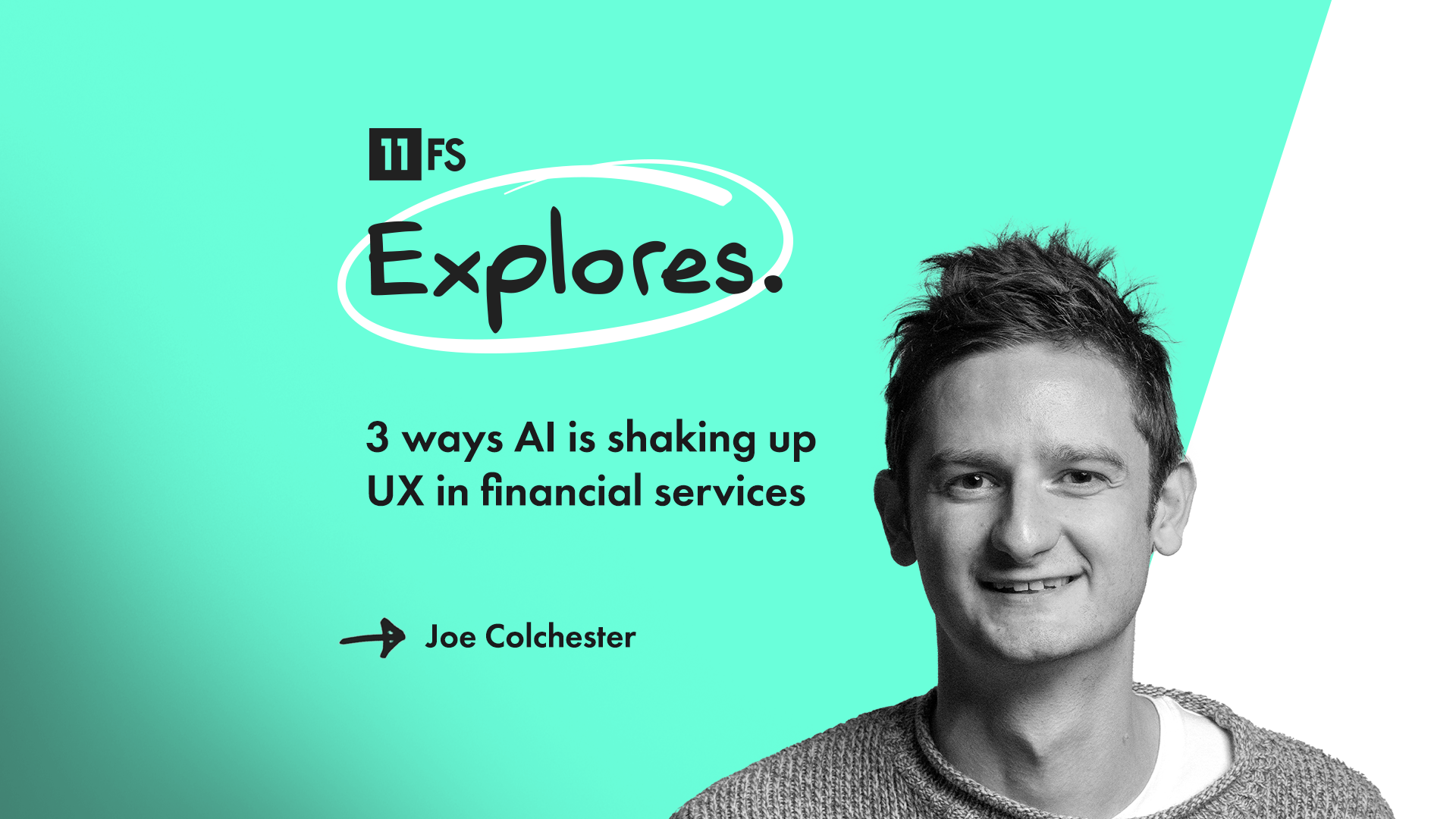
3 ways AI is shaking up UX in financial services | 11:FS Explores
The entire world is buzzing about AI, and that ain't changing anytime soon. But as AI becomes more integrated into our daily lives, what impact will it have on financial services and how people interact with them?





What are fintechs? - Decoding: Banks
Ever wanted to know what’s going on behind the scenes every time we make a payment?

How does banking regulation work? - Decoding: Banks
Regulation is essential. It stops banks from going bust or behaving badly.

How has software evolution influenced banking? - Decoding: Banks
The invention of the computer revolutionised banking in the 1950s.

How does lending work? - Decoding: Banks
Lending has been around for thousands of years and is one of the cornerstones of banking.

How can traditional banks win on the banking battlefield? - Decoding: Banks
They're down, but they're not certainly not out.

How do card networks operate? - Decoding: Banks
Mastercard and Visa are the two biggest credit card networks in the world.

How has the banking battlefield evolved? - Decoding: Banks
We kick off our Decoding: Banks series with a look at the banking landscape today and how we got here.

960
Insights: The future of Revolut with UKCEO Francesca Carlesi
The UK banking battlefield has never been more competitive. Customers expectfinancial apps that are personalised, seamless, and that genuinely make a differenc...
960
Insights: The future of Revolut with UKCEO Francesca Carlesi
960
Insights: The future of Revolut with UKCEO Francesca Carlesi
The UK banking battlefield has never been more competitive. Customers expectfinancial apps that are personalised, seamless, and that genuinely make a differenc...
960
Insights: The future of Revolut with UKCEO Francesca Carlesi
960
Insights: The future of Revolut with UKCEO Francesca Carlesi