Content Hub


Global

Does your bank even care that you’re rich?
I’ve been thinking about HENRYs recently. Not the Henry who asked me to marry him - I was 8, he was 5 - although he does cross my mind occasionally. HENRYs, short for ‘High Earners Not Rich Yet’, was coined as a label by Shawn Tully in 2003.

The real differentiator in financial AI won't be intelligence. It will be trust.
If you listened to the headlines, you'd think the competitive race in financial services is about one thing: building the smartest AI. We think that's the wrong way to look at it.

Banks, it’s time to decide what kind of embedded banking player you are
Embedded banking without strategic intent is expensive theatre. Lots of APIs, lots of partnership announcements, lots of pilots, but not much revenue. And that’s the risk facing corporate banks right now.

Trust is the new infrastructure in agentic commerce
AI assistants already help people compare products, check availability and plan purchases. Agentic commerce extends that role to placing the order: a customer sets a budget and a few conditions, then gives the software permission to complete the purchase.

The payday playbook: Designing around the moment money lands
For most people, the month falls into two phases - before and after payday - when balances jump, debts feel manageable, and financial intentions come back within reach. But in most banking apps, payday is treated as a passive event.

The Agentic AI trap: More agents won’t transform financial services
Financial institutions are moving quickly into agentic AI. Coding agents, workflow agents, document agents, service agents and operational agents are already entering the enterprise. Many will create useful gains, some of them genuinely impressive. But that is not the real test.

Junior accounts are growing up
Barclays is acquiring the UK arm of GoHenry, a money app for 6 to 18-year olds. With a reported price tag of £180 million for around 500,000 active accounts, £360 per head is a chunky investment.

Positive friction: Why a little resistance helps
For the past decade, the banking industry has been focused on developing frictionless interfaces. Financial institutions have prioritised seamless transactions, instant gratification, and engaging gamified features in a bid to build the ultimate digital financial experience.

Targeted support is coming. But customer decision-making has already moved on.
The need for better, tailored support through the customer experience is clear, but few are accounting for the fundamental shift that financial services has experienced with the introduction of AI.


Financial services must move beyond inertia to cultivate long-term loyalty
Loyalty is defined as “a strong feeling of support or allegiance”. However, in the context of financial services, it is more accurately defined as engineered persistence: a series of subconscious cues that steer customers toward familiar choices.

Phishing-proof by design: The future of banking authentication
For years, banks have relied on OTPs as a second factor for logins and sensitive actions. Sent via SMS, these short codes were designed to add security on top of a password. But they have become one of the weakest and most frustrating parts of the banking experience.

Designing for the human behind the business
The people using business banking tools don’t necessarily have financial backgrounds. Many smaller businesses can't afford a dedicated finance team. Yet banks keep building products that assume expertise their customers don't have, leaving them to figure things out on their own.
The rise of subscription banking and why it needs to fit into customers' lives
As our financial lives become more complex, there is a growing expectation for banks to offer more support, be more relevant, and generate greater everyday value. One of the clearest places this shift is starting to show up is in subscription banking.

96
96. Like FUD off a duck's back
We. Are. Here. Today we bring you: Project Libra, regulators ready Ethereum future approval and Bitfinex and Tether continued…

319
319. News: I'm sorry, banks
David and Simon are joined by some great guests to talk about some of the most interesting stories of the last 7 days. Including, central banks join the Extinction revolution, Amazon takes on India and how to make your own wearables.
318
318. Interviews: Innovate Finance Global Summit
We went to the Innovate Finance Global Summit to find out what regulators both home and abroad are expecting to happen in fintech over the next year and much more.
95
95. Curated scavenger hunts
We. Are. Here. Today we bring you: Banking culture hinders Blockchain adoption, CryptoKicks coming soon to a Nike store near you and finally, chickens on a blockchain.

39
39. Agriculture and Commodities Insurance
Sarah and Nigel are joined by some fantastic guests to talk about agricultural commodities insurance and the volatility that goes along with it.
317
317. News: Nettles and dock leaves
David and Simon are joined by some great guests to talk about some of the most interesting stories of the last 7 days, including Paris tries to come for London’s fintech crown, Robin hood applies for a banking charter as T-Mobile tries to get back into banking and Germans hold more gold than Fort Knox.
316
316. Insights: Customer infantstructure
Ross and Adam are joined by some great guests to talk about financial literacy in children, and the brewing world of innovation in pocket money apps.
94
94. Binance gets Dex’y
We. Are. Here. Today we bring you: Big French Bank does a thing, a very interesting thing, Binance gets Dex’y and Serena Williams invests in Coinbase.
315
315. News: Tech for Tech’s Sake
Sarah and Simon are joined by Freddy Kelly, Ben Gleisner and Simon Vans-Colina to talk about some of the most interesting stories of the last 7 days. Including: US lenders prepare for a recession; Halifax gets slammed for looking a little too like Monzo and Starling in their rebrand and Facebook call time on UK P2P payments.
314
314. Insights: Strong Customer Authentication
Sarah sits down with an amazing roundtable of guests to dig into Strong Customer Authentication (SCA) and what it means for the payments space and the financial ecosystem.
93
93. No such thing as a private blockchain
We. Are. Here. Today we bring you: France creates a regulatory framework for tokens, the SEC might let Blockstack be and Banks abandon XRP…….oh nooooo
38
38. News: a Slice of AI
Sarah's joined by a couple of great guests this week to talk about the most interesting stories happening in insurtech over the past couple of weeks.
313
313. News: Copy/paste product
Jason and Adam are joined by some great guests to talk about some of the most interesting stories of the last 7 days. Including: Standard Chartered’s $1bn fine, London looks set to take the fintech unicorn crown from San Francisco nd your cat could be the next voice of the ‘miaowing’ debit card.
312
312. Insights: Live! The future of money
We're in NYC for New York Fintech Week! Sam is joined by some great guests to talk about the future of money and the UK as a leader in the space.
92
92. The richest man in the world
We. Are. Here. Today we bring you: Bank stablecoins are coming, Big banks back new international blockchain alliance and how a guy called Colin Platt became the richest person in the world…
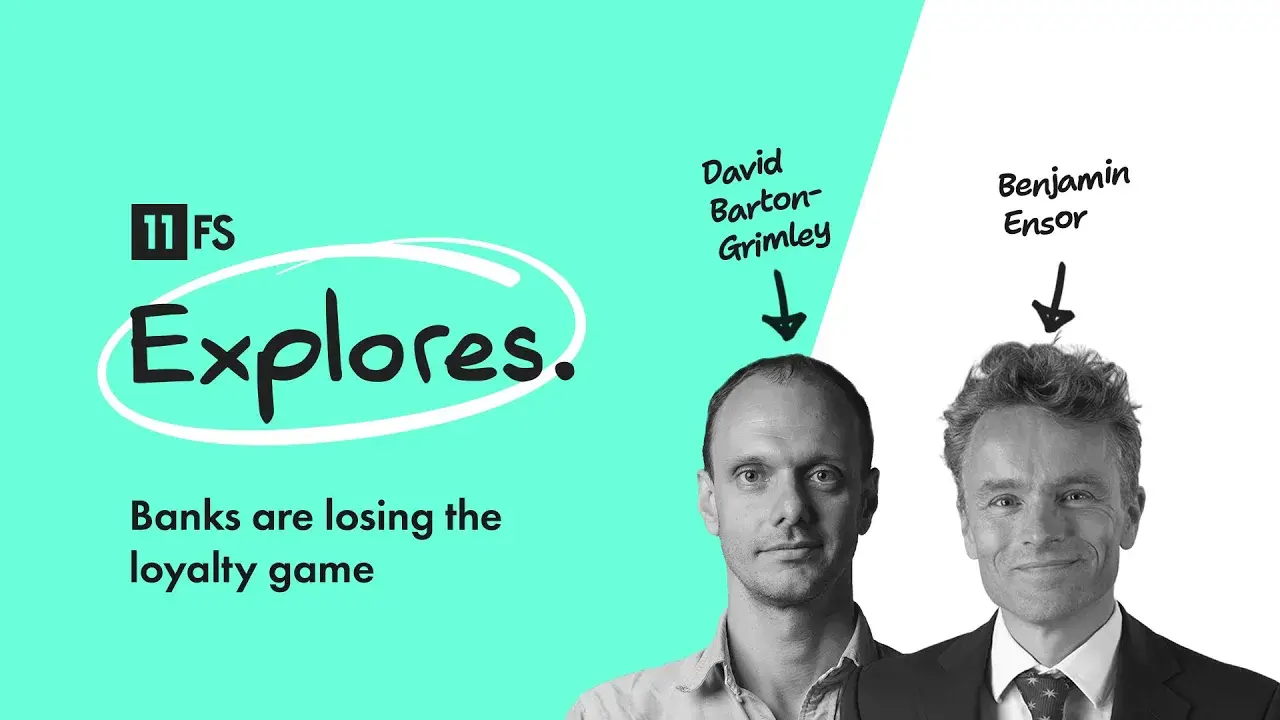
Banks are losing the loyalty game | 11:FS Explores
Hey, banks! This might sting a bit. You’re getting loyalty all wrong - and it’s costing you customers. But all is not lost!

3 ways AI is shaking up UX in financial services | 11:FS Explores
The entire world is buzzing about AI, and that ain't changing anytime soon. But as AI becomes more integrated into our daily lives, what impact will it have on financial services and how people interact with them?
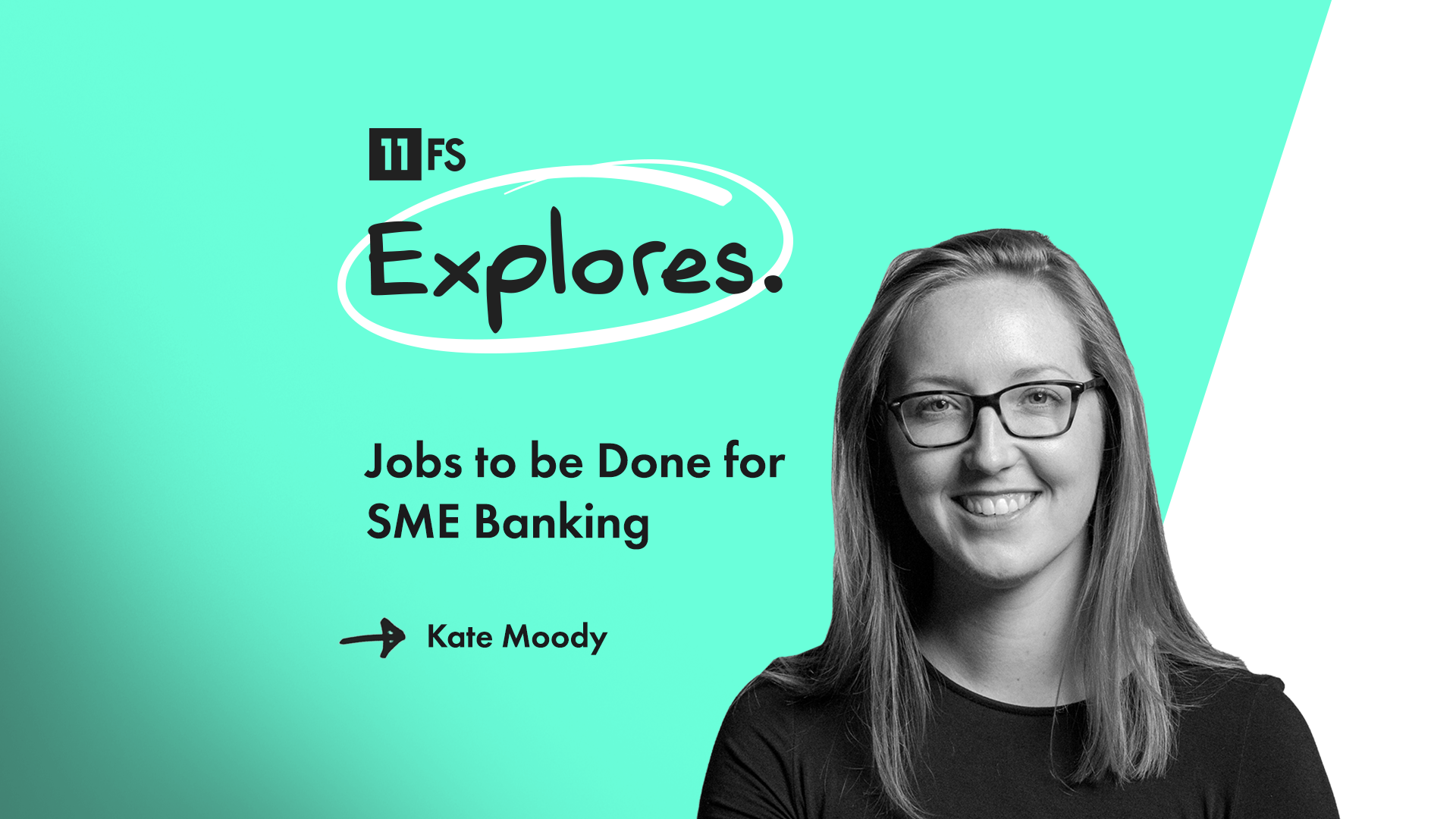
Using Jobs to be Done to revolutionise SME Banking | 11:FS Explores
It's not just a buzzword.





What are fintechs? - Decoding: Banks
Ever wanted to know what’s going on behind the scenes every time we make a payment?

How does banking regulation work? - Decoding: Banks
Regulation is essential. It stops banks from going bust or behaving badly.

How has software evolution influenced banking? - Decoding: Banks
The invention of the computer revolutionised banking in the 1950s.

How does lending work? - Decoding: Banks
Lending has been around for thousands of years and is one of the cornerstones of banking.

How can traditional banks win on the banking battlefield? - Decoding: Banks
They're down, but they're not certainly not out.

How do card networks operate? - Decoding: Banks
Mastercard and Visa are the two biggest credit card networks in the world.

How has the banking battlefield evolved? - Decoding: Banks
We kick off our Decoding: Banks series with a look at the banking landscape today and how we got here.

960
Insights: The future of Revolut with UKCEO Francesca Carlesi
The UK banking battlefield has never been more competitive. Customers expectfinancial apps that are personalised, seamless, and that genuinely make a differenc...
960
Insights: The future of Revolut with UKCEO Francesca Carlesi
960
Insights: The future of Revolut with UKCEO Francesca Carlesi
The UK banking battlefield has never been more competitive. Customers expectfinancial apps that are personalised, seamless, and that genuinely make a differenc...
960
Insights: The future of Revolut with UKCEO Francesca Carlesi
960
Insights: The future of Revolut with UKCEO Francesca Carlesi